
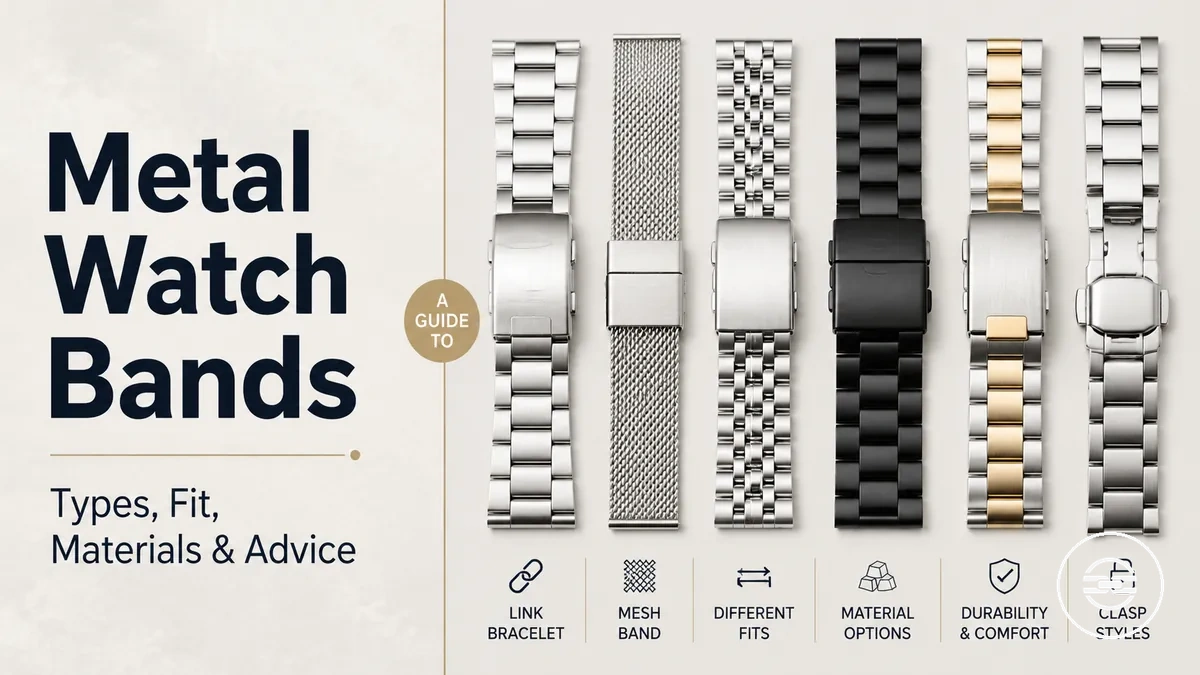
Metal Watch Bands Guide for Fit, Style, and Buying Decisions
Metal watch bands are watch attachments made from metal that secure a watch case to the wrist. Often referred to as a metal bracelet or, in some contexts, a metal strap, they represent a category of watch bands whose suitability depends on more than appearance. Choosing among metal watch bands involves evaluating fit, material, clasp design, finish, and overall compatibility as part of a buying decision.
Fit and compatibility can vary with wrist size, lug width, case connection, and available sizing or adjustment options. Material also influences weight, skin feel, and daily comfort, while the clasp and finish may affect security, durability, and wear experience. Because these attributes work together, the right choice depends on the watch, the wearer, and the intended use rather than on a single feature.
Understanding how a metal watch band is constructed provides the context needed before comparing individual options. Learning how type, material, fit, clasp, finish, and compatibility relate to one another creates a clearer basis for evaluating replacement bands, quick release systems, spring bars, and other buying considerations discussed later in the guide.
A careful buying decision is based on balancing comfort, compatibility, construction, finish, and long-term usability. Considering these criteria together provides a practical, non-promotional framework for comparing metal watch bands with confidence.
What Metal Watch Bands Are
Metal watch bands are metal straps or metal bracelets that attach a watch case to the wrist. They hold the watch case in place while providing a secure connection between the watch and the wearer. Their primary function is to create a stable attachment that keeps the watch comfortably positioned on the wrist during normal wear.
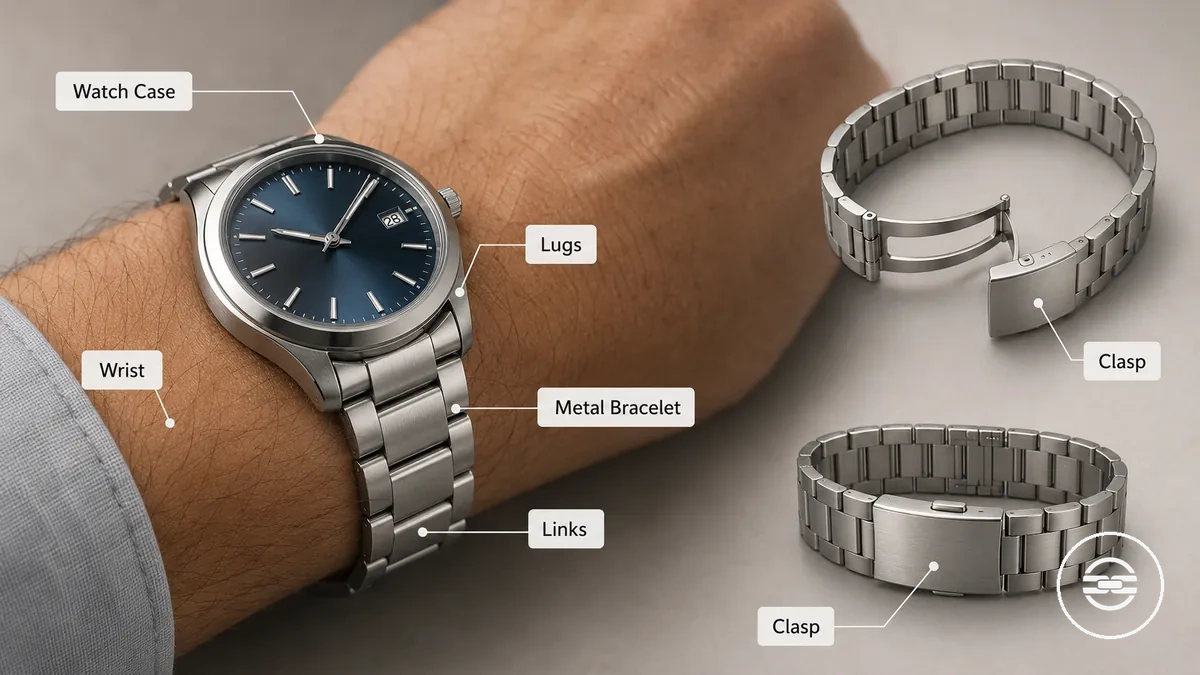
The image above identifies the basic parts of a metal watch band, including the watch case, links, clasp, and wrist attachment points. Metal watch bands are commonly constructed from connected links or woven metal and use a clasp to secure the band, while available adjustment features may influence fit and comfort depending on the wearer. Although the terms watch band, metal strap, and metal bracelet are often used interchangeably, a metal bracelet usually refers to an all-metal construction. Leather, silicone, and other non-metal alternatives fall outside the main scope of this category because they differ in material rather than defining what metal watch bands are.
Metal Bands, Straps, and Bracelets
Metal bands, straps, and bracelets are overlapping terms that commonly describe the same watch attachment, although their usage can vary by context. The image below illustrates this terminology overlap, with metal bracelet often referring to a linked metal design, while watch band is used as the primary label throughout this guide for consistency. 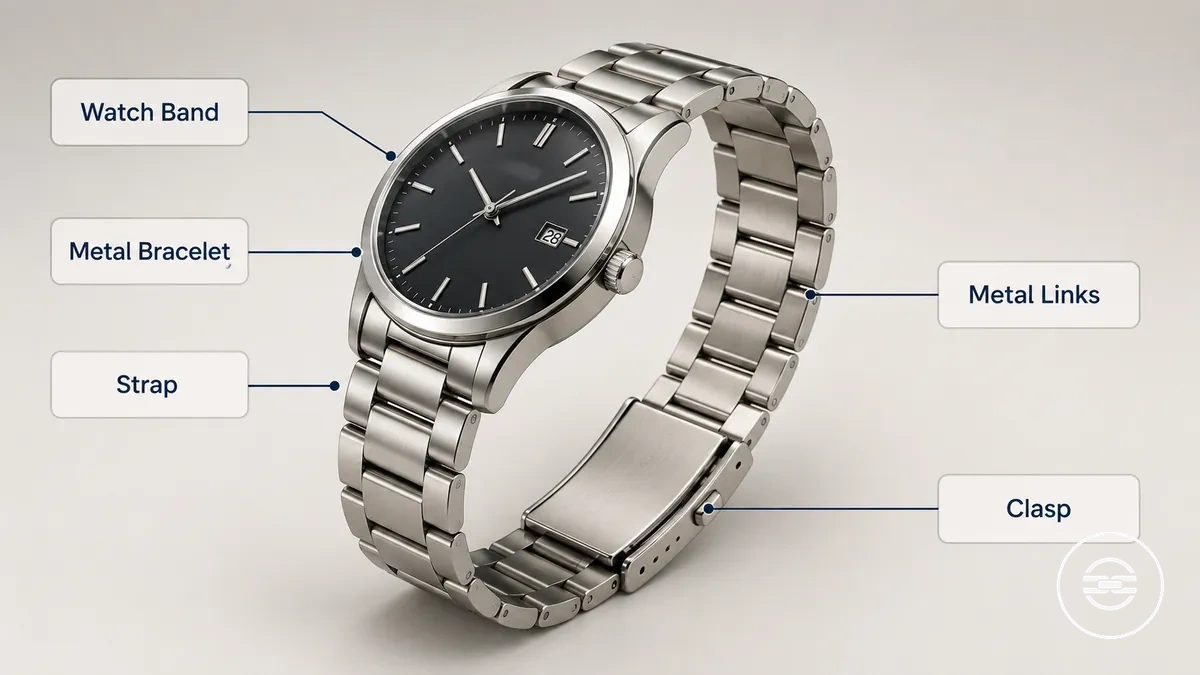
A band, strap, or bracelet may all describe the part that connects a watch case to the wrist, but the terms are commonly used interchangeably rather than following a fixed rule. In this guide, metal watch band is the dominant term, while metal bracelet often refers to a watch band made from metal links and secured with a clasp.
When a Metal Watch Band Makes Sense
A metal band usually makes sense when daily wear, durability, adjustability, and a refined style matter. The image below shows how fit, clasp position, and wearing context affect suitability. 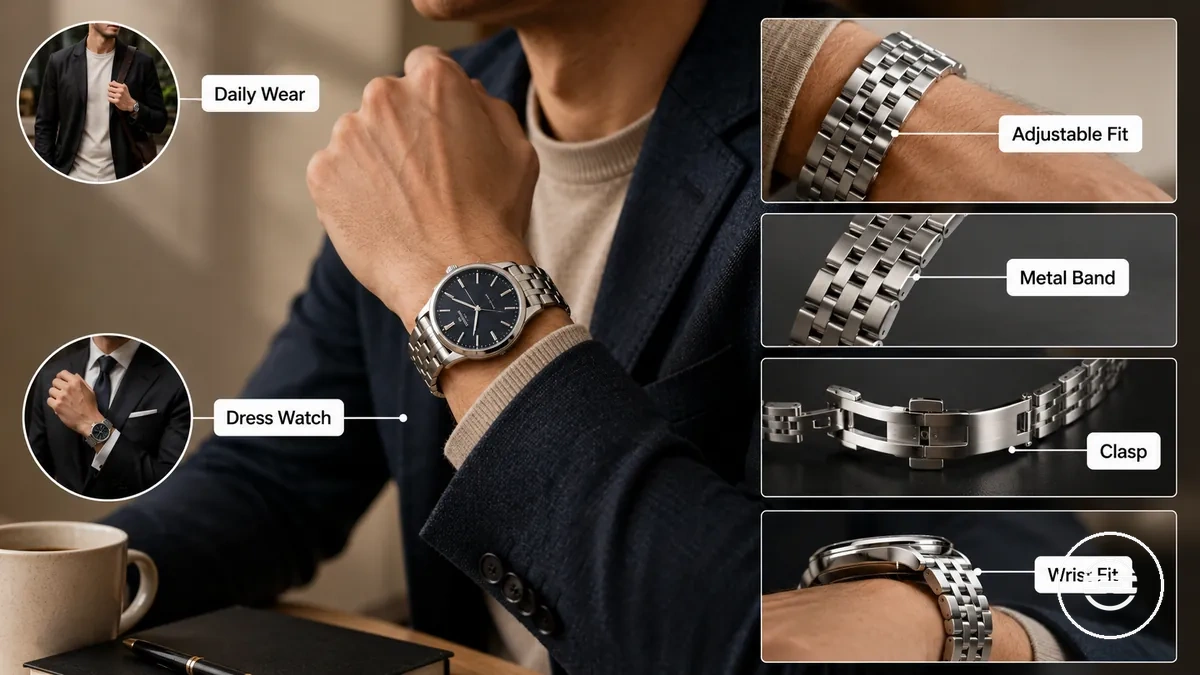 Comfort, weight, skin feel, and wrist fit still depend on the watch and wearer.
These situations show when the balance of useful attributes and trade-offs may suit the wearer:
- Daily wear: A metal band can suit everyday use when durability and easy adjustment matter, although added weight may affect comfort.
- Dress watch: A metal bracelet can support a formal style when its finish matches the watch case, with personal taste as the main trade-off.
- Adjustable fit: A clasp or removable metal links may improve adjustability, depending on the band construction and required wrist fit.
- Replacement use: A metal band may be suitable when compatibility and a secure fit are confirmed, while comfort and style still depend on the watch and wearer.
A metal watch band is therefore most suitable when the use case matches the desired balance of comfort, durability, adjustability, wrist fit, and style.
Main Metal Watch Band Types
Main metal watch band types are grouped by construction and wearing behavior so you can compare how each design fits, adjusts, and feels on the wrist. The primary groups are the link bracelet, mesh band including the Milanese band, and the expansion band, each using a different construction, adjustability method, and clasp approach.
Construction affects resizing, wrist fit, flexibility, and style, so identifying the band type helps set realistic expectations before choosing one. The comparison below summarizes the main differences without replacing the more detailed subtype explanations.
| Type | Structure | Fit behavior | Comfort tendency | Best use case |
|---|---|---|---|---|
| Link bracelet | Removable metal links with a clasp | Adjusted by removing or adding links | Stable feel; comfort depends on wrist fit and weight | Daily wear and versatile styling |
| Mesh or Milanese band | Woven mesh with an adjustable clasp | Fine adjustment on many designs | Flexible feel depends on fit | Dress or everyday wear |
| Expansion band | Stretch band with no-clasp behavior | Expands to slip over the wrist | Comfort depends on band tension and wrist fit | Convenient on-and-off wear |
For a more detailed explanation of each construction and selection considerations, see metal watch band types.
Link Bracelets
A link bracelet is a metal watch band made from connected metal links that create a flexible bracelet secured by a clasp. Many designs include removable links for size adjustment, while the articulation between the links helps the bracelet move naturally with the wrist. Comfort and perceived weight depend on the link design, clasp, and overall construction.
Solid links and folded links can indicate different construction approaches and may serve as a local value signal, but neither determines the overall wearing experience on its own. The level of articulation, weight, and adjustment available varies by bracelet design and influences wrist fit and everyday comfort.
Mesh and Milanese Bands
A mesh band is a metal watch band made from woven metal, while a Milanese band is a finely woven mesh style often associated with a more refined finish. Weave density, flexibility, clasp style, and finish influence wrist feel, adjustment, comfort, and dress-style appearance. The woven construction allows the band to follow wrist movement, although its wearing behaviour depends on the weave and clasp design.
A Milanese band is a type of mesh band rather than a separate construction category. Depending on weave density and clasp style, adjustment may be finer on certain designs, while tighter weaves or particular clasps may change wrist feel or require more care around snagging.
Expansion Bands
An expansion band is a stretch-style metal watch band that uses flexible links and no clasp. The stretch mechanism and link tension allow the band to expand across a limited wrist size range, although fit and comfort vary by sizing and construction. This design can improve wearing convenience by allowing the band to slip on and off without opening a clasp.
Suitability still depends on link tension and the intended wrist-size range. A band that is too tight or too loose may reduce comfort, so the stretch design should not be treated as universally fitting.
Metal Watch Band Materials and Finishes
A metal watch band's material and finish influence its durability, weight, appearance, maintenance, and skin feel. Material refers to the metal type, such as stainless steel or titanium, while the finish describes the surface treatment, including brushed, polished, or coated surfaces. Distinguishing material from finish helps compare practical performance separately from visual appearance.
Durability, corrosion resistance, weight, skin feel, and long-term maintenance depend on the combination of material, surface finish, construction, and everyday wear rather than on a single attribute. Surface texture and coatings may influence maintenance or visible wear over time, while different metal types can change weight and wearing feel. The table below summarizes the practical decision effects of common materials and finishes.
| Material or finish | Attribute affected | Likely effect | Buying relevance |
|---|---|---|---|
| Stainless steel | Durability, weight | Often offers a balanced combination of durability and weight for everyday use | Suitable when everyday durability is an important criterion |
| Titanium | Weight, skin feel | Often weighs less than stainless steel, although product construction varies | May suit buyers who prioritize lower weight despite a higher price tendency |
| Brushed finish | Texture, scratch visibility | Can make light surface marks less noticeable | Useful when lower-maintenance appearance is preferred |
| Polished finish | Appearance | Produces a reflective surface that may show marks more easily | Suitable for a brighter dress-style appearance |
| Matte or coated finish | Coating, surface texture | Surface wear and appearance vary with the coating and everyday use | Compare maintenance expectations alongside appearance |
For a more detailed comparison of individual metal types, see metal watch band materials.
Stainless Steel and Titanium Options
Material choice affects a metal watch band's weight, durability, finish, corrosion behavior, and skin feel. Stainless steel commonly provides a more substantial feel, while titanium-style options often reduce weight, although the overall experience depends on construction, finish, and product labeling. The main trade-off is typically between the familiar feel of steel and the lighter wearing experience of titanium-style options.
| Stainless steel | Titanium-style options |
|---|---|
| Usually heavier, with durability and corrosion behavior depending on construction and finish. | Often lighter, with skin feel, durability, and corrosion behavior varying by construction and product labeling. |
| Available in brushed, polished, or coated finishes that influence appearance and visible wear. | May use natural or coated finishes, with surface appearance and coating wear varying by design. |
| Can suit buyers who prefer a more substantial wrist feel. | May suit buyers who prioritise lower weight, although price tendency is often higher. |
Material labels alone do not confirm identical grade, coating quality, durability, or skin feel across products, so these attributes should be considered alongside the stated construction and finish.
Brushed, Polished, Matte, and Coated Finishes
A surface finish is the treatment applied to a metal watch band that changes its appearance, texture, scratch visibility, and maintenance expectations without changing the underlying base material. Surface appearance is separate from the metal itself, so finish affects how the band looks and may wear rather than the strength of the base metal. Comparing finish types helps balance visual preference with everyday care.
- Brushed finish: Creates a textured appearance that can make minor surface marks less noticeable and is often chosen for everyday wear.
- Polished finish: Produces a reflective shine that may make fingerprints and surface marks easier to notice, depending on use.
- Matte finish: Reduces surface shine and provides a subdued appearance, with cleaning sensitivity and visible wear varying by the surface treatment.
- Coated finish: Uses a surface coating to alter colour or texture, although coating wear and long-term appearance depend on the coating and everyday use.
Fit and Compatibility Factors
Compatibility depends on whether a metal watch band matches both the watch case and the wearer's wrist. A secure fit requires the correct lug width, appropriate case size and end links, compatible spring bars or a quick release system, and suitable band length for the intended wrist size. Because watch models, case geometry, and band construction vary, compatibility is always conditional.
Watch-case fit and wrist comfort should be checked separately. A band may fit the watch case but still need adjustment for comfort, while a comfortable band may not match the case because of incompatible end links, case geometry, or attachment hardware. Before choosing a replacement, verify the criteria below and compare measurements with metal watch band sizing.
- Confirm the lug width matches the watch case before selecting a replacement band.
- Check whether the case size and case geometry require straight or curved end links.
- Verify that the spring bars or pin type match the band's attachment design for a secure fit.
- Confirm whether the watch uses a quick release system or a standard spring bar.
- Compare the band length with your wrist size to assess comfort after adjustment.
- If the watch uses a proprietary or integrated design, replacement fit may depend on the specific watch construction.
Verifying these conditions helps reduce incompatibility risk before replacing a band. For a more detailed verification process, see metal watch band compatibility.
Lug Width and Case Size
Lug width and case size are key fit check factors when choosing a replacement metal watch band. Lug width determines whether the band can attach between the lugs, while case diameter and case shape influence visual balance. Physical band fit depends on lug width, but compatibility may still vary with the watch case.
The spring bar position and lug shape can change how a same-width band sits against the case. Watches with curved end links or an integrated bracelet may require a case-specific design, so lug measurement alone may not provide the expected watch case fit.
Wrist Size and Band Length
Wrist size and band length determine wearing comfort, not watch-case compatibility. A comfortable fit depends on your wrist circumference, preferred tightness, and the available adjustment through removable links, micro-adjustment, clasp adjustment, or expansion stretch. These factors affect wrist fit and should be evaluated separately from case compatibility.
- Compare your wrist circumference with the available band length before selecting a bracelet.
- Check whether removable links provide enough adjustment for your preferred fit.
- Confirm that the clasp includes micro-adjustment or another clasp adjustment feature if fine-tuning may be needed.
- If the band uses expansion stretch, verify that its adjustment range suits your wrist rather than assuming it accommodates every size.
- Choose the adjustment method that matches your preferred comfort, as wearing fit depends on both bracelet length and available adjustment.
End Links, Spring Bars, and Quick Release Fit
End links, spring bars, and quick release hardware connect the band to the watch case. Their shape, width, pin type, and case clearance determine whether the connection may provide a secure fit or create a mismatch risk.
- Verify that the end links match the case shape and leave suitable case clearance.
- Check that the spring bars match the required width for the connection point.
- Confirm that the pin type suits both the replacement band and the watch case.
- If the band uses quick release hardware, verify that the quick-release lever has enough clearance to operate without contacting the case.
- Integrated or proprietary bracelet designs may not accept generic replacement bands, even when other hardware dimensions appear similar.
Clasp Types, Comfort, and Wearing Security
The right clasp depends on the balance you want between comfort, adjustment, and wearing security. A clasp controls how the band closes, opens, and sits on the wrist, so different closure mechanisms can suit different wearing preferences. Clasp choice influences security and comfort in different ways.
Compare each clasp style by its closure mechanism, available adjustment, wrist feel, and security features instead of assuming one design suits every wearer. Features such as a safety lock, push button, clasp thickness, and micro-adjustment can affect daily wear depending on your priorities. The comparison below highlights these criteria.
| Clasp style | Closure behavior | Security cue | Comfort effect | Adjustment relevance |
|---|---|---|---|---|
| Fold-over clasp | Folds over the wrist to secure the closure | May include a safety lock for additional closure security | Thickness varies by design and may affect wrist feel | Often available with micro-adjustment on compatible bracelets |
| Deployment clasp | Opens and closes with a folding mechanism | Provides a controlled closure during daily wear | Can offer a balanced wrist feel depending on bracelet construction | Adjustment features vary by model |
| Push button clasp | Releases using integrated push button controls | May reduce accidental opening when fully engaged | Can make daily removal easier for users who value convenience | Micro-adjustment availability depends on the clasp design |
For a deeper comparison of metal watch band clasp types, review how closure designs, adjustment features, and wearing characteristics differ so you can choose the clasp style that best matches your preference for a low profile, secure closure, or easy daily removal.
How to Choose a Metal Watch Band
To choose a metal watch band, base the decision on compatibility, comfort, and everyday use rather than appearance alone. The suitable choice depends on watch style, wrist fit, material, clasp, and adjustment needs. Treat the buying choice as a sequence of practical criteria.
Match the replacement band to the watch style and confirm the required lug width, band length, and overall proportions. These checks help determine whether the band type and finish may suit the watch while supporting the intended wrist fit.
Compare the material feel, clasp security, and available adjustment according to the intended use case. Material, skin feel, clasp thickness, and adjustment range can affect comfort, so the recommended direction depends on the wearer’s priorities.
Use the following selection checks to compare each option consistently:
- Match the band type and finish to the watch style.
- Confirm the required lug width before selecting a replacement band.
- Check that the band length supports the intended wrist fit.
- Compare the material feel and expected skin comfort.
- Evaluate the clasp design for the preferred level of wearing security.
- Check whether the available adjustment suits the desired fit.
- Use construction quality, finish consistency, and overall value signal alongside price.
When comparing products through external retailers or manufacturers, use the same criteria and review fit information, construction details, and return conditions to reduce return risk.
Here are product examples that may make comparison easier. Before buying, always review the compatibility criteria, essential features, and product details.
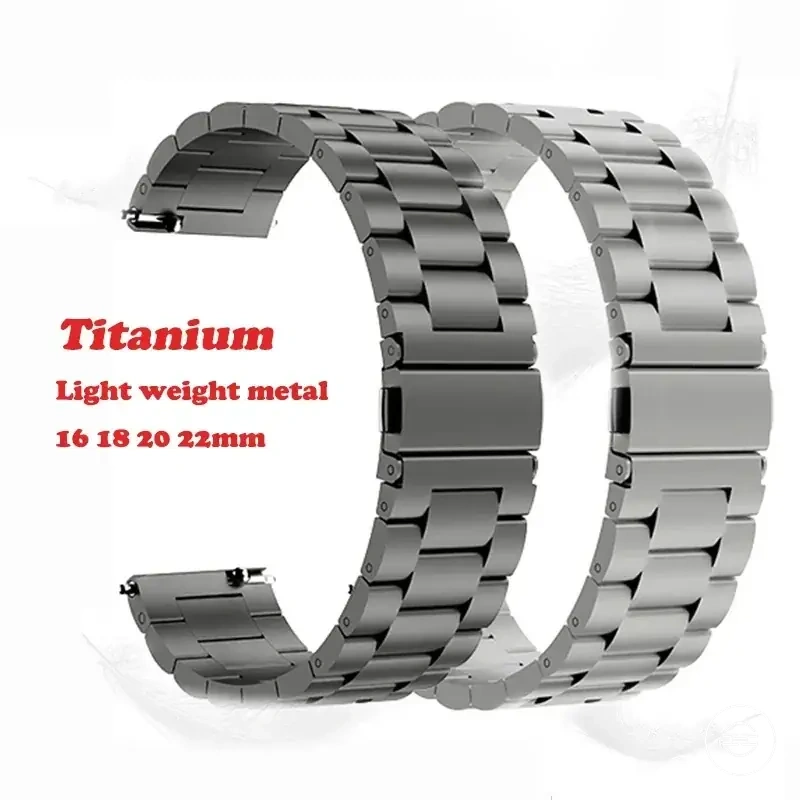
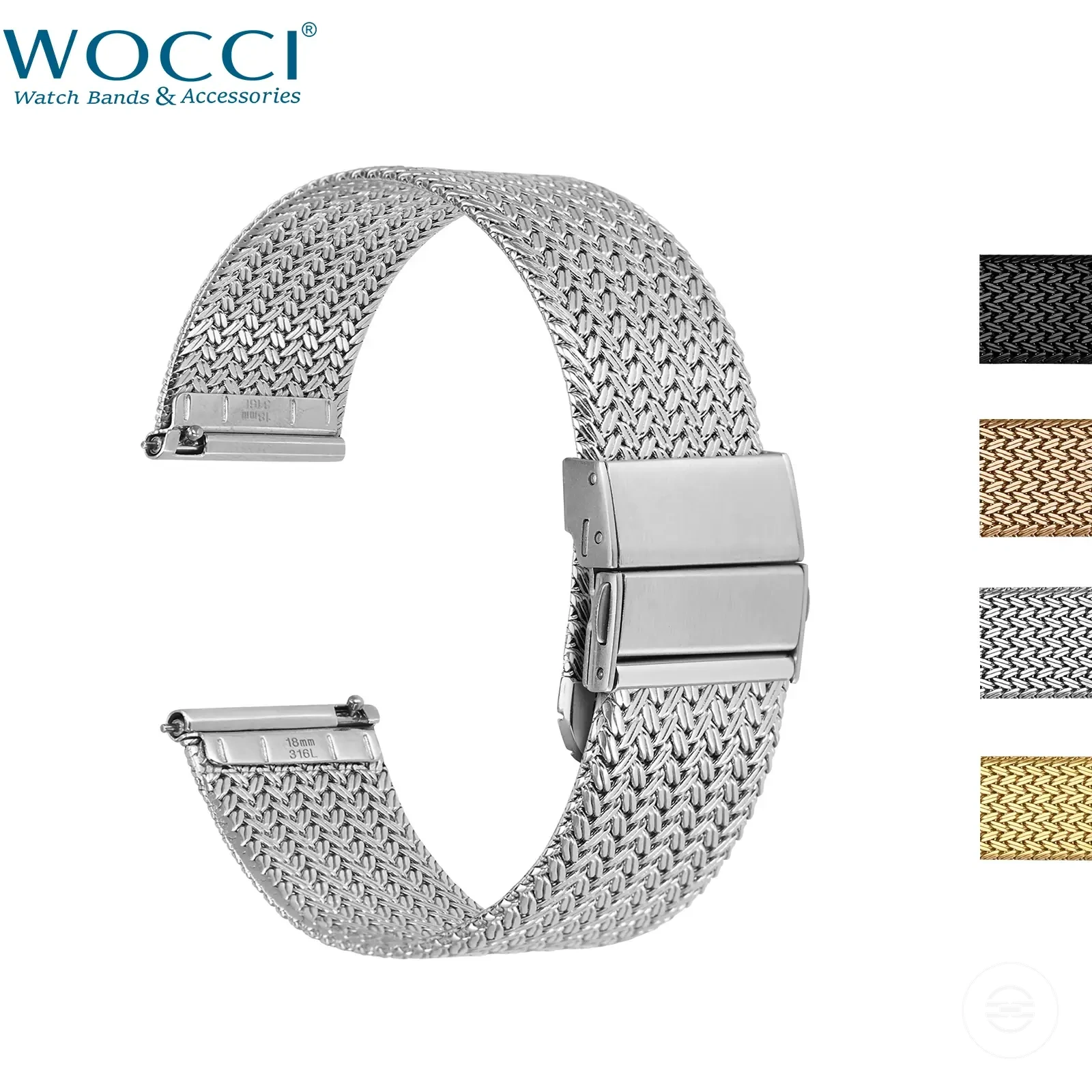
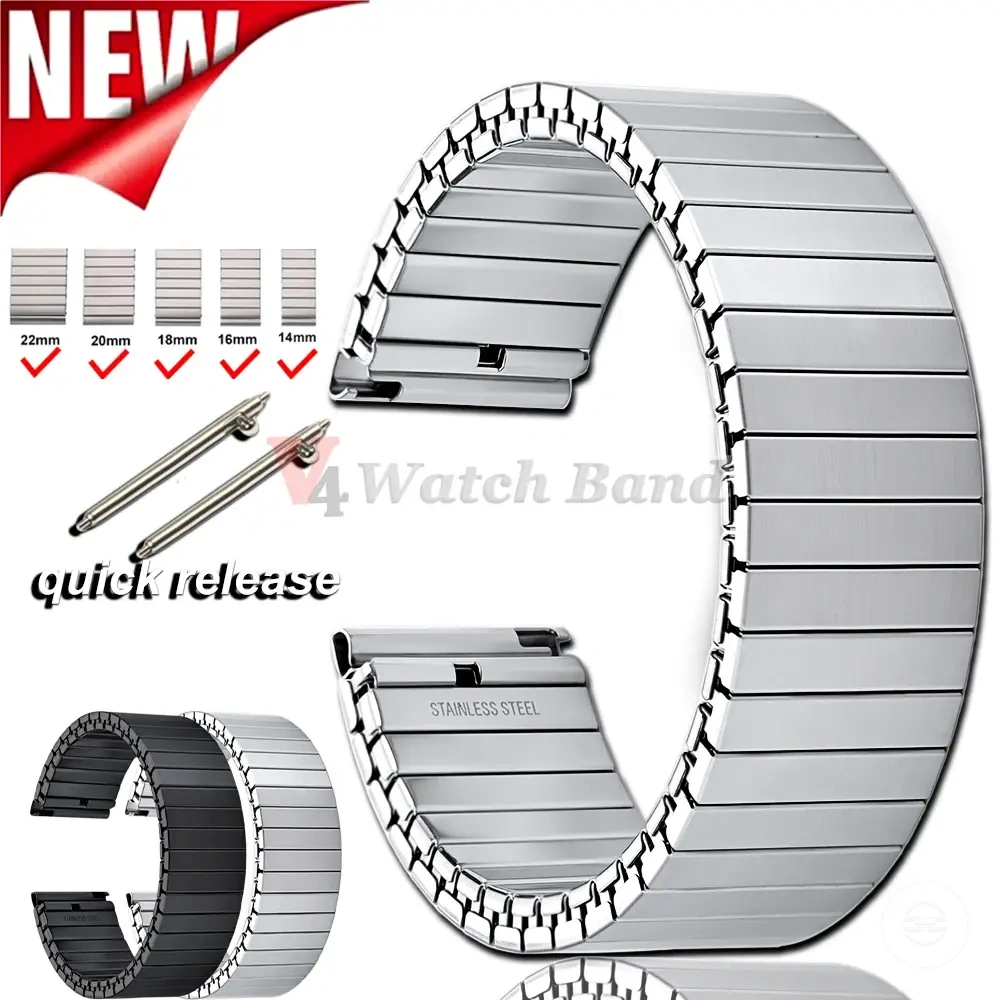
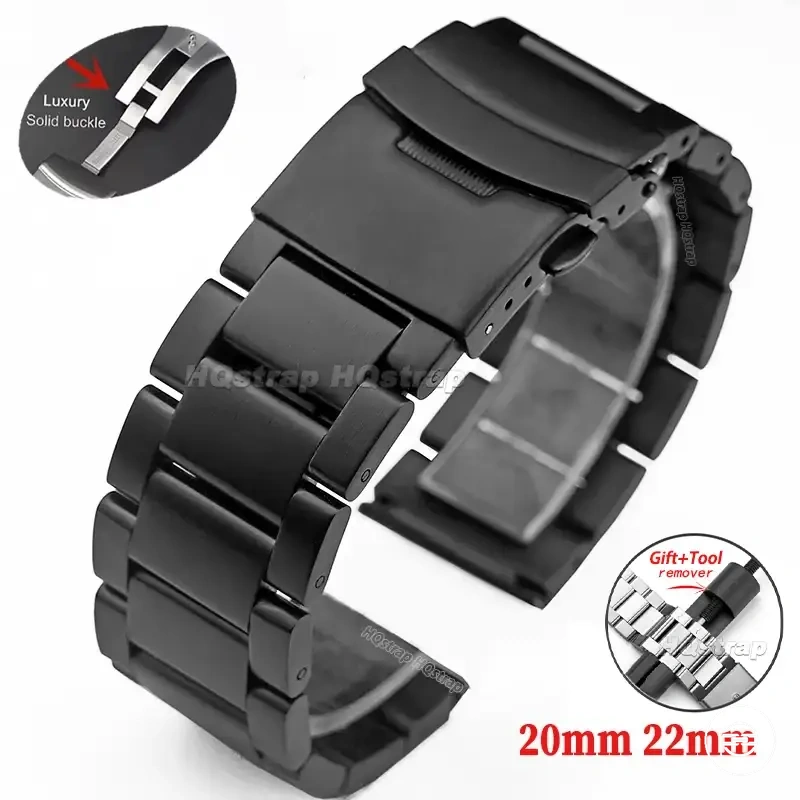
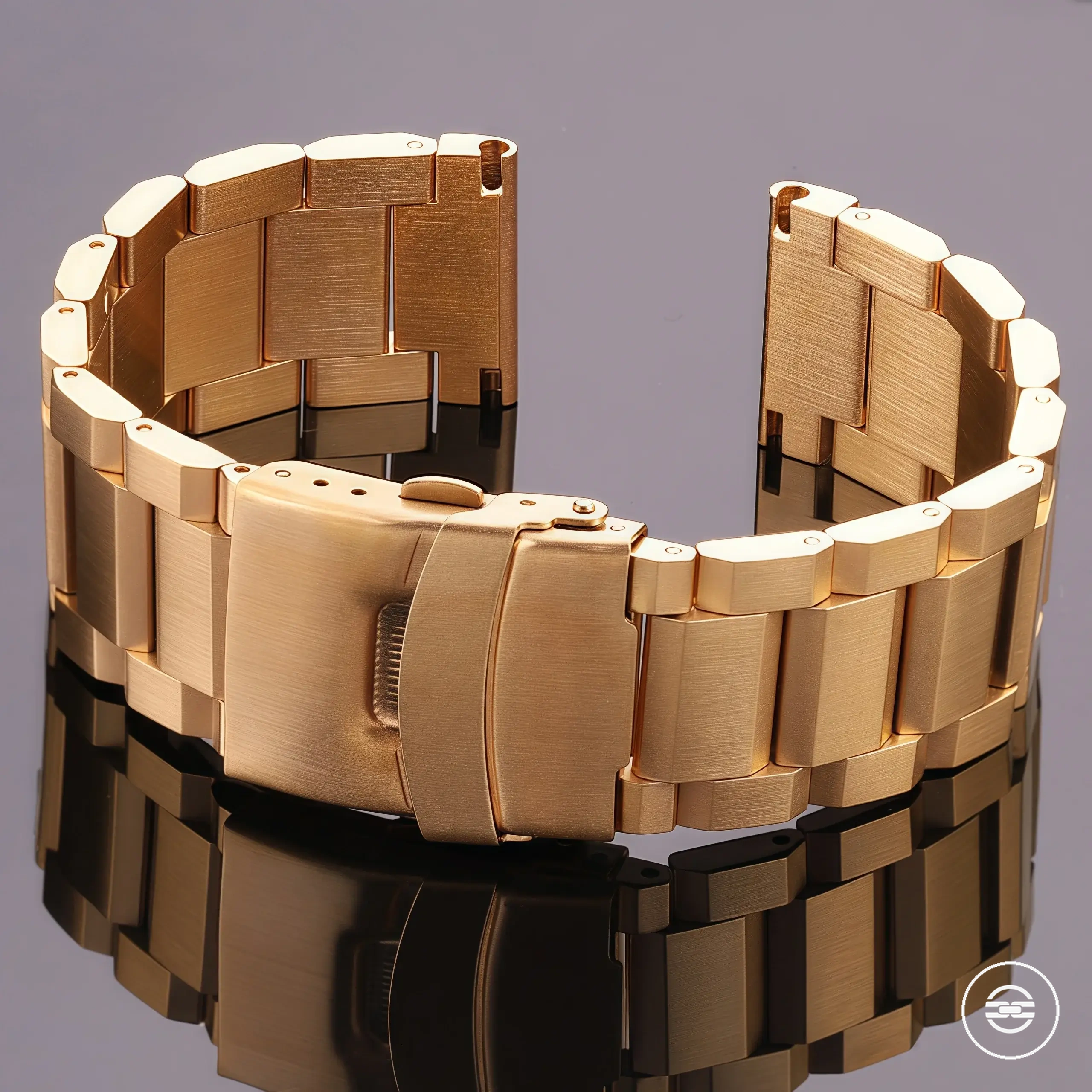
Match the Band to the Watch Style
For a dress, everyday, or sport-adjacent watch, the right watch style match depends on how the case finish, case size, dial formality, band type, and band finish work together. A style match is usually strongest when these elements create visual coherence, while differences in finish or proportion may produce a more noticeable visual mismatch. The final choice should reflect both the watch design and wearer preference by connecting the case style to the band appearance.
A slim mesh bracelet may suit a more formal dial, while a wider link bracelet can complement a larger case size and stronger wrist presence. For everyday or sport-adjacent use, compare band width, finish, and proportion with the watch case rather than treating any combination as a fixed style rule.
Balance Durability, Weight, and Skin Feel
Durability, weight, and skin feel should be evaluated together because improving one characteristic may involve a trade-off with another. Material, finish, and construction can influence rigidity, coating, smoothness, ventilation, and skin contact, which may affect comfort and the overall wear outcome. The suitable balance depends on the wearer and use context, so comfort and durability remain conditional trade-offs.
| Attribute | Possible benefit | Possible trade-off | Decision cue |
|---|---|---|---|
| Durability | Robust construction may support sustained daily wear. | Heavier links or greater rigidity may reduce comfort for some wearers. | Compare construction and link quality with the expected wear conditions. |
| Weight | Lower weight may improve wrist feel during extended wear. | A lighter design may use different materials or construction methods. | Select the level of heaviness that suits the intended use and wearer preference. |
| Skin feel | Smoothness, coating, and ventilation may improve surface feel and comfort. | Skin contact and sensitivity can vary with material, finish, mesh, and clasp design. | Compare the contact surfaces and ventilation if daily comfort is a priority. |
Check Adjustment and Replacement Requirements
Adjustment and replacement requirements should be checked before choosing a metal watch band because the required hardware and setup may vary by design. Features such as link removal, quick release, spring bars, tools, and the end-link shape can affect resizing, replacement, and case fit. Verifying these requirements in advance can reduce setup effort and buying risk.
- Check whether link removal may be needed to achieve the preferred wrist fit.
- Verify whether the band uses quick release or a quick-release lever.
- Confirm whether compatible spring bars or other replacement hardware may be required.
- Check whether dedicated tools may be needed for adjustment or resizing.
- Compare the end-link shape with the watch case because compatibility and case fit can affect setup effort.
Value Signals Before Buying
Value signals depend on observable quality cues that help judge whether a metal watch band suits its intended use before continuing along a buying path. Price alone cannot show whether the construction, finish, and fit-related details are suitable. Value therefore means observable quality plus suitability.
Link construction and clasp feel provide practical quality cues. Consistent link movement and predictable clasp operation may reduce uncertainty, while visible looseness, uneven movement, or an inconsistent closure can indicate greater wear risk.
Finish consistency, material claim clarity, and adjustment range also affect the value decision. A consistent coating and a clear material description may support confidence in the band’s appearance, while limited adjustment or unclear claims can increase return risk when wrist fit or suitability is uncertain.
Use this compact value check to connect each observable condition with its possible risk and decision implication:
- Check link construction for consistent assembly and movement.
- Assess clasp feel for predictable opening and closing.
- Look for finish consistency across visible surfaces and coating.
- Confirm that the adjustment range appears suitable for the intended wrist fit.
- Review each material claim for clear and specific wording.
- Consider available fit evidence and merchant-dependent return risk before following an external buying path.
These checks can distinguish acceptable budget choices from bands with visible quality or suitability risks, although price and merchant outcomes remain dependent on the external buying context. Continue with the metal watch band buying checklist before following the external buying path.
Here are product examples that may make comparison easier. Before buying, always review the compatibility criteria, essential features, and product details.
Common Buying Mistakes With Metal Watch Bands
Common buying mistakes can lead to poor fit, discomfort, weak compatibility, or disappointing value when key attributes are not checked before purchase. Comparing lug width, band length, clasp design, finish, and adjustment options can reduce these risks. Most mistakes come from skipped checks.
Use the following checklist to identify each preventable buying risk and choose a safer option before following a buying path.
- Avoid choosing by appearance alone without confirming lug width; a mismatch may cause poor compatibility, so compare the band width with the watch case specification.
- Do not overlook band length; an unsuitable length may create poor fit or discomfort, so check the stated size range against the intended wrist fit.
- Do not assume every clasp will feel or operate the same; an unsuitable design may affect comfort or security, so review the clasp type and closure method.
- Avoid judging the finish only from promotional images; inconsistent coating or surface appearance may reduce perceived value, so look for clear product details and consistent visual evidence.
- Do not ignore the available adjustment range; limited resizing options may increase fit risk, so verify whether the band can be adjusted to the required length.
- Avoid treating material labels as complete evidence of quality; unclear material information may increase buying risk, so compare the claim with the band’s construction, finish, and stated suitability.