
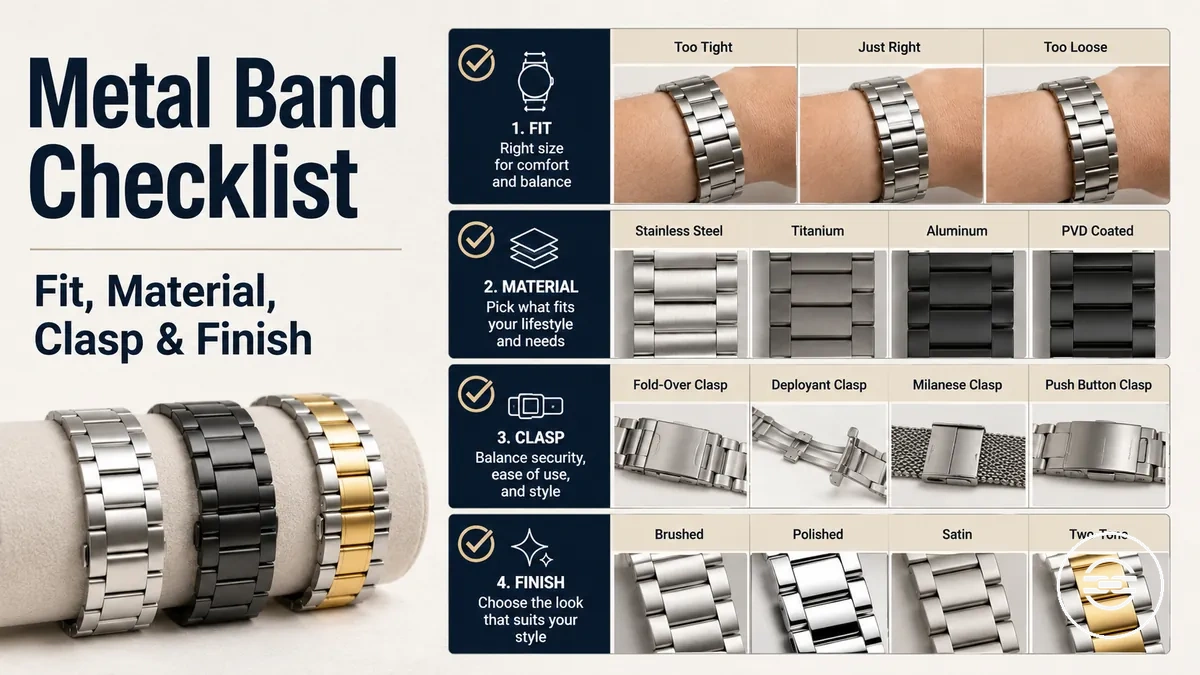
Metal Watch Band Buying Checklist
A metal watch band should be checked for fit, compatibility, material, clasp, finish, and value before purchase. These checks help determine whether the band suits the watch and the wearer rather than simply looking suitable in a listing. The wider range of metal watch bands includes different bracelet constructions and adjustment methods, so relying on appearance alone can lead to the wrong choice.
A buyer may compare a listing with the watch case, wrist, and existing attachment details before selecting a replacement band. Checking the stated lug width, spring bars, end links, and adjustment options can reduce uncertainty when comparing different designs. This shifts the decision from appearance to compatibility with the watch and wrist.
The buying checklist below separates essential fit and compatibility checks from preference-based choices such as finish and style. It provides a structured way to review the most important purchase criteria while recognising that the final choice depends on the watch model, measurements, band construction, and intended use.
Before making a purchase decision, compare the listing details carefully and confirm any unclear specifications with the relevant retailer or manufacturer instead of relying solely on product images or descriptions.
The metal watch band buying checklist below organises the main purchase checks into practical decision points that can be reviewed before choosing a band.
- Fit: Confirm that the band length and available adjustment can suit the wrist. Comfort may vary depending on wrist size, link construction, mesh flexibility, and clasp position.
- Compatibility: Compare the watch case, lug width, spring bars, and end-link design with the listing details. A matching lug width alone may not confirm compatibility if the attachment design differs.
- Material: Review the stated material, construction, weight, and overall durability. Stainless steel and other metal constructions can differ in feel, maintenance needs, and long-term wear.
- Clasp: Check the clasp type, closure security, and available adjustment. A suitable clasp should support comfortable daily wear while allowing practical sizing changes where available.
- Finish: Compare the finish with the watch case and intended use. Brushed, polished, or mixed finishes are preference-based factors that may influence appearance and maintenance.
- Value: Assess value by considering compatibility information, construction quality, adjustment options, clasp design, finish, and the clarity of the product listing rather than appearance or price alone.
Confirm watch compatibility before choosing a band
Watch compatibility must be confirmed before choosing a metal watch band because physical attachment depends on the watch and band connection rather than appearance alone. The annotated image labels the compatibility points to check before choosing a band, including the lug area, spring bar position, and band end. The watch case is the starting point.
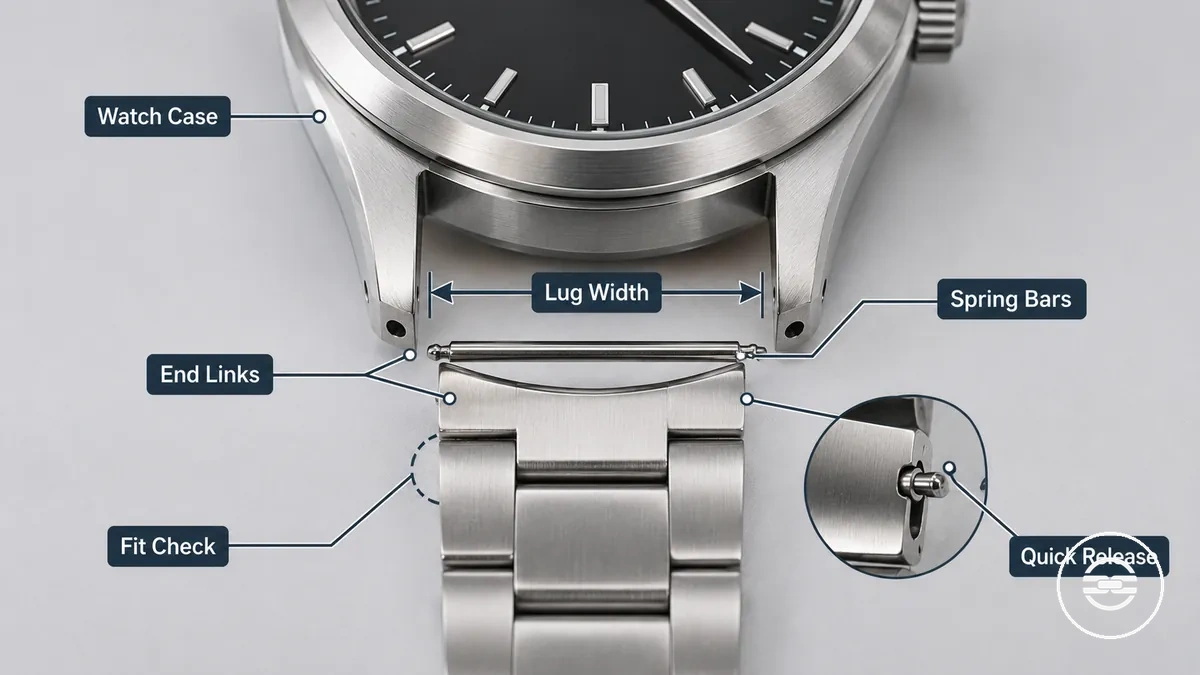
Compare the watch case, lug width, lug connection, end links, and spring bars with the listing details before evaluating style or price. Reviewing these attachment points together provides a clearer basis for assessing metal watch band compatibility. The mini-checklist below covers case fit, connector fit, spring bar clearance, and band end type. A mismatch in any condition may increase fit risk.
- Watch case: Verify that the case design and attachment area suit the intended band; a different connector shape may create attachment fit risk.
- Lug width: Compare the stated band width with the measured lug width; an incorrect width may prevent the band from seating correctly.
- End links: Check whether straight or curved end links match the case connection; the wrong shape may leave gaps or prevent alignment.
- Spring bars: Verify that the spring bars suit the lug connection and band end; an unsuitable fit may prevent secure attachment.
- Quick release: Check whether the quick-release mechanism has enough clearance around the watch case; limited clearance may interfere with attachment.
- Listing claims: Compare broad compatibility wording with measured dimensions and case design; relying on the claim alone may increase fit risk.
Terms such as “universal fit” or “quick release” do not by themselves confirm that a compatible band will fit a specific watch. Compatibility still depends on measured dimensions, lug design, and attachment clearance, which sets the boundary before the next local compatibility detail.
Lug width and case connection
Lug width and case connection determine whether a band can attach correctly to the watch case. The diagram below shows where the lugs, measurement span, and band end are checked. Compare the measured lug width with the band width stated in the listing.
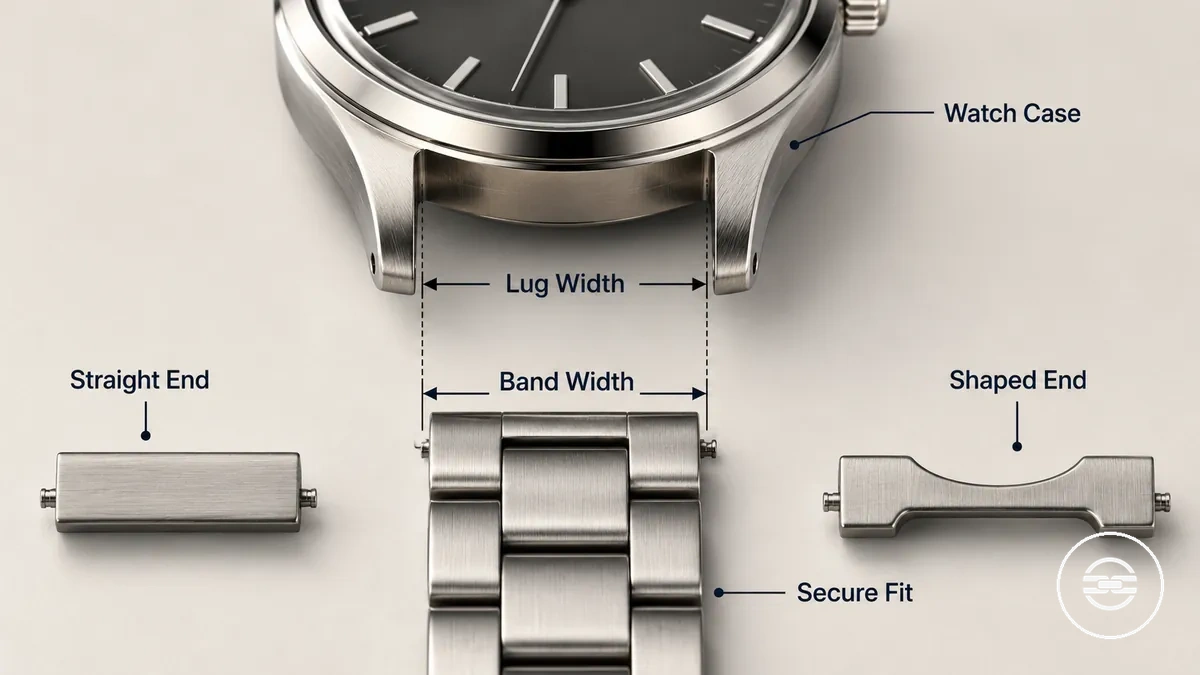
A straight end and a shaped end may seat differently against the watch case, so the end shape must suit the case connection. Even a small mismatch between lug width and band width may create a gap, unwanted movement, or a security risk. A secure fit depends on matching measurements, suitable end fit, and accurate listing details.
- Measured width: Compare the lug width on the watch case with the stated band width.
- End shape: Check whether the band uses a straight end or shaped end that suits the case connection.
- Seating: Verify that the band end can sit between the lugs without an obvious gap or misalignment.
- Listing match: Confirm that the listing describes the same lug spacing and end fit as the watch measurement.
End links, spring bars, and quick release fit
Attachment hardware still matters after lug width is confirmed because matching width alone does not ensure the band end will fit the watch correctly. The diagram below shows the attachment hardware that should be checked before choosing a band. Do not assume that included parts will fit, as attachment hardware may differ by case shape and hardware specifications.
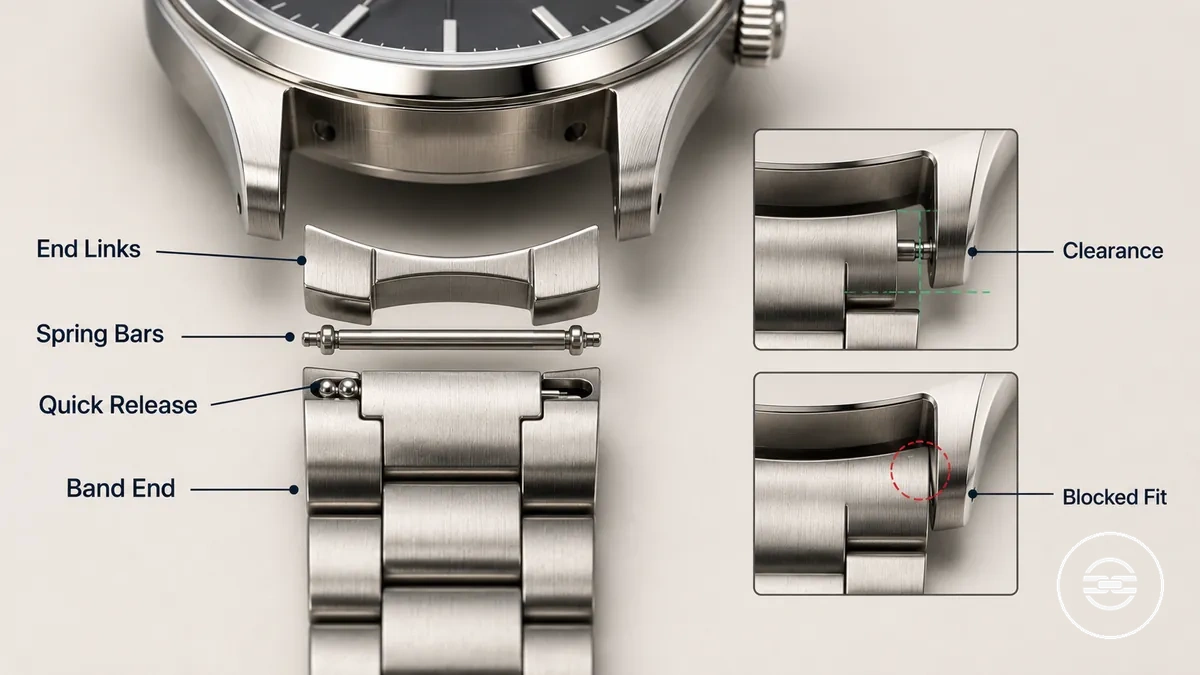
Check the attachment hardware before relying on the included components. End links should match the watch case shape, spring bars should suit the required length and thickness for the band end, and quick release mechanisms need enough clearance to avoid a blocked fit. A compatible fit depends on suitable end links, spring bars, quick release clearance, and the watch case requirements.
- End links: Verify that the end links suit the watch case shape; the wrong end pieces may cause loose seating or visible gaps.
- Spring bars: Check that the included spring bars match the required length and thickness; unsuitable pins may reduce attachment security.
- Quick release: Confirm that the quick-release lever has enough clearance around the case opening; limited clearance may create a blocked fit.
- Included hardware: Compare the supplied attachment hardware with the listing and watch requirements; included hardware may not match the watch case or band end.
Check wrist fit and adjustment range
Wrist fit depends on the available size range and adjustment features as well as your wrist circumference. Band length, removable links, clasp adjustment, and expansion range all influence whether the bracelet can be sized comfortably. This sizing check is separate from confirming case compatibility.
If you have a small wrist, check that enough removable links or clasp adjustment are available to shorten the bracelet without reducing comfort. If you have a large wrist, confirm that the band length and expansion range suit your wrist circumference. Buyers between standard link sizes may prefer bracelets that offer finer adjustment through removable links or clasp settings. Comparing your measurements with the metal watch band sizing guide and the product listing helps determine whether the available adjustment range is suitable.
The table below separates wrist measurements from adjustment features so each factor can be checked before buying. A suitable adjustment range may improve comfort when the bracelet design and available sizing options match the wearer's wrist.
| Fit factor | What to check | Why it matters | Buying risk |
|---|---|---|---|
| Wrist circumference | Compare your measurement with the stated sizing range. | Helps assess potential wrist fit. | Comfort may be limited if the sizing range does not suit your wrist. |
| Band length | Review the bracelet length provided in the listing. | Shows whether the bracelet can accommodate your wrist size. | The bracelet may be too short or too long. |
| Removable links | Check whether removable links or half-links are available. | Supports finer size adjustment. | Limited adjustment may increase return risk. |
| Clasp adjustment | Confirm whether the clasp provides additional sizing positions. | Allows small fit changes during daily wear. | Limited adjustment may reduce comfort. |
| Expansion range | Look for any stated adjustment or expansion range. | May help accommodate normal wrist size changes. | Comfort depends on the available adjustment range. |
Band length and removable link range
Band length and removable link range determine how much sizing flexibility remains after purchase. The usable range depends on the minimum length, maximum length, and available adjustment features. Check the listing carefully before relying on the stated band length.
A listing that shows only the total band length may not indicate how much adjustment is actually available. Minimum length helps indicate suitability for smaller wrists, while maximum length helps indicate whether the bracelet may accommodate larger wrists. Removable links, half-links, and clasp adjustment holes provide the sizing allowance that can refine the fit within the listed range. The final fit depends on the available adjustment features as well as your position within the listed range.
Use this checklist to verify the adjustment features before purchase.
- Minimum length: Confirm the shortest bracelet length after available adjustment; an unsuitable minimum length may leave the band too loose on a smaller wrist.
- Maximum length: Confirm the longest stated band length; an insufficient maximum length may limit suitability for a larger wrist.
- Removable links: Check how many removable links are available; a limited link range may reduce sizing flexibility near the lower end of the listed range.
- Half-links: Verify whether half-links are included or available; they may provide finer adjustment for wrists between full-link sizes.
- Clasp adjustment holes: Check whether the clasp offers additional adjustment holes; extra positions may improve fine sizing within the available range.
Snugness, movement, and daily comfort
Daily comfort depends on how the bracelet feels while your wrist moves rather than when your arm is still. A correctly sized metal watch band should provide secure hold without unnecessarily restricting natural movement. The goal is to balance snugness with comfortable movement during daily wear.
Use these observable signals to judge wear feel rather than relying on a single fit rule.
- Too tight: Noticeable pressure marks, persistent edge feel, or constant clasp contact may indicate that the bracelet is too snug for comfortable daily wear.
- Too loose: Frequent watch head rotation or excessive movement across the wrist may suggest that the band does not provide a secure hold.
- Acceptable movement: Slight movement without continuous watch head rotation can indicate a balanced fit for many wearers.
- Hair pulling: Hair pulling may vary with bracelet construction and wrist hair, so it is a practical comfort signal when comparing bands.
- Daily comfort: Wrist shape, clasp position, daily activity, and bracelet construction can all influence wear feel, so comfort should be judged by observable signals rather than universal rules.
Evaluate metal material and bracelet construction
Metal material and bracelet construction should be evaluated together because both influence how a metal watch band performs in everyday use. Material alone does not show how the bracelet will feel or wear over time. Compare both factors when judging durability, weight, and comfort.
Listing language can mix cosmetic descriptions with construction claims, so they should not be treated as the same evidence. Terms such as finish or surface coating describe appearance, while bracelet construction indicates how the band is built and how it may behave during wear. For a deeper comparison beyond this buying check, review metal watch band materials. Give more weight to specific construction details when cosmetic wording is not supported by product information.
When comparing similar bands, assess the material claim first and then verify the bracelet construction. The table below separates appearance cues from construction signals so each feature can be judged against the intended use case. Practical outcomes still depend on the product-specific details provided in the listing.
| Material or construction | Attribute to check | Practical trade-off | Decision signal |
|---|---|---|---|
| Stainless steel | Material grade, weight, and bracelet construction | Durability and corrosion resistance can vary with the actual steel and construction. | Look for specific material and construction details rather than the material name alone. |
| Coated metal | Surface coating, base metal, and finish description | The visual finish may change as surface wear develops. | Separate cosmetic finish claims from evidence about the underlying construction. |
| Mesh | Flexibility, weave, and adjustment design | Mesh may provide a lighter and more flexible wear feel than some link constructions. | Check whether the mesh structure suits the expected comfort and use case. |
| Solid links | Link construction, weight, and joining method | Solid links may create a heavier feel and stronger perceived quality, depending on the design. | Confirm that the listing describes the actual link construction rather than using quality language alone. |
| Expansion construction | Expansion structure, stretch, and sizing behaviour | Flexibility and fit behaviour vary by the expansion design. | Verify that the expansion structure matches the intended use case and expected movement. |
Stainless steel quality and metal durability
A stainless steel label is useful, but it is not automatic proof of premium quality or consistent metal durability. Stainless steel quality depends on the material claim and the supporting details provided in the listing. Read those supporting cues before drawing conclusions about durability, weight, wear resistance, or finish longevity.
Use the checklist below to judge whether a listing supports its material claim with meaningful evidence. Grade claims, corrosion wording, coating notes, link thickness, and care or warranty cues provide stronger buying signals than the stainless steel label alone. These details can improve buyer confidence by clarifying what the listing can and cannot support. Even then, metal durability depends on the stated materials, construction, finish, use, and care.
- Grade claims: Check whether a specific grade is identified and supported by product details rather than a general stainless steel label.
- Corrosion wording: Look for qualified corrosion wording instead of broad durability statements that lack supporting information.
- Coating notes: Confirm whether a surface coating is described, as coating notes may help explain expectations for finish longevity and surface wear.
- Link thickness: Review link thickness together with bracelet construction because it may influence weight and perceived durability without proving either on its own.
- Care or warranty cues: Read any care guidance or product-specific warranty information as supporting evidence rather than proof of long-term wear resistance.
Mesh, solid link, and expansion construction
Bracelet construction changes flexibility, weight, adjustment style, and visual formality, making it an important buying-check attribute alongside the material. Comfort and everyday wear depend on wrist fit, intended use, and product design rather than construction type alone. Mesh, solid link, and expansion construction each offer different trade-offs to compare before purchase.
When similar materials are available, compare the bracelet construction to see how it may affect daily use. The table below highlights how each construction changes comfort, sizing behavior, maintenance exposure, and style outcome without treating one option as universally better. Choose the construction that best matches your use case, wrist fit, and preferred wearing experience.
| Construction | What it changes | Trade-off | Better fit when |
|---|---|---|---|
| Mesh | Flexibility, light feel, and adjustment style | May provide greater flexibility, while maintenance needs and style outcome depend on the specific mesh bracelet design. | You prefer adjustable comfort with a lighter-feeling bracelet. |
| Solid link | Weight, visual formality, and bracelet feel | May create a heavier feel and a more formal appearance, depending on the link bracelet design. | You prefer added weight and a structured appearance for your use case. |
| Expansion | Stretch, sizing behavior, and slip-on convenience | Comfort and fit depend on the expansion construction and how the stretch band matches your wrist. | You want quick on-and-off wear with sizing behavior suited to everyday use. |
Inspect clasp security and adjustment comfort
Clasp security and adjustment comfort should be checked together because a stable closure can still create discomfort during daily wear. The clasp should remain secure while allowing the band to sit without excessive pressure or awkward movement. Judge both security and comfort before deciding whether the clasp suits daily wear.
Closure security depends on how the closure mechanism engages, while the release method affects ease of use and accidental-opening risk. A safety lock may add clasp stability when it reduces the chance of unintended release, and micro-adjustment can improve the fit range when wrist size changes during the day. Compare these features at a checklist level before reviewing broader metal watch band clasp types. Poorly matched adjustment or clasp placement may increase wrist pressure and fit-related discomfort.
A secure clasp is not automatically the most comfortable clasp. More substantial closures may feel bulky, while slimmer clasps may provide fewer adjustment options. Use the checklist below to compare clasp stability, ease of use, accidental-opening risk, and comfort outcome.
- Closure security: Check whether the clasp closes positively and remains stable during normal wrist movement without relying on vague security claims.
- Release method: Assess whether the release is easy to operate intentionally but unlikely to activate through routine contact or movement.
- Safety lock: Look for a safety catch when added protection against accidental opening matters for the intended use case.
- Micro-adjustment: Confirm whether the clasp provides enough adjustment range to reduce looseness or excessive tightness as fit needs change.
- Wrist pressure: Consider whether the clasp size, position, and adjustment create concentrated pressure or interfere with comfortable wrist movement.
Closure mechanism and safety lock stability
The closure mechanism affects how securely the band stays closed once it is on the wrist. Lock stability depends on the clasp mechanism, closure design, and daily wear conditions rather than the mechanism name alone. Verify each listing cue before deciding whether the closure is suitable.
A fold-over, push-button, deployment-style, magnetic-style, or safety lock feature should be evaluated by the details provided in the listing rather than the name alone. Mechanisms that appear secure but lack clear listing information deserve extra caution because the risk of accidental release or difficult removal is harder to judge. Use the checks below to verify each closure mechanism before making a buying decision.
- Fold-over: Verify how the fold-over section locks into place and whether the listing explains the closing action; unclear engagement may increase uncertainty about accidental release.
- Push-button: Check whether the push-button release requires deliberate operation and whether the listing describes the release method; limited detail may make closure stability harder to assess.
- Deployment-style: Confirm how the deployment-style closure opens and closes, and whether the listing explains the locking action; incomplete information may affect confidence in everyday security.
- Magnetic-style: Look for a listing cue describing the closure force or intended wear conditions; missing details may make accidental release risk more difficult to evaluate.
- Safety lock: Verify that the safety lock is shown as a separate locking feature and that its operation is described; the label alone does not confirm lock stability.
Micro-adjustment and clasp pressure on the wrist
When the overall band length is close but the fit still falls between link sizes, the clasp can determine whether the bracelet feels comfortable throughout the day. Wrist size may change slightly with daily wear, making a fixed link setting feel tighter or looser over time. Micro-adjustment helps refine the fit without changing the overall bracelet size.
Micro-adjustment features improve fine sizing, while clasp shape influences clasp pressure and long-term comfort. Adjustment holes, a sliding clasp, and half-link alternatives can provide finer fit control for wrists between link sizes, whereas clasp thickness and underside pressure affect how the clasp rests against the wrist. Use the checklist below to evaluate both fine adjustment and pressure comfort before choosing a band. Overall comfort depends on wrist size changes, clasp thickness, and wearer sensitivity rather than a single adjustment feature.
- Adjustment holes: Check whether enough adjustment holes are available to refine the fit when the bracelet sits between link sizes.
- Sliding clasp: Verify whether the sliding clasp provides fine adjustment suitable for small daily wrist size changes.
- Half-link alternatives: Look for half-link alternatives when removing or adding a full link would noticeably change the fit outcome.
- Clasp thickness: Consider whether the clasp thickness may create a pressure point or feel bulky during normal wrist movement.
- Underside pressure: Check how the clasp contacts the underside of the wrist, as pressure may vary with clasp fit, position, and wearer sensitivity.
Match finish and style to the watch use case
When a band already fits the watch, the next decision is whether its finish and style suit the watch case, wearing context, and personal preference. A finish that complements the watch may feel more appropriate for daily wear or dress use, but the choice still depends on the watch design and individual taste. Judge the finish by how well it supports the intended watch use case.
Finish, colour tone, and surface texture provide objective matching cues before style becomes a preference. Brushed, polished, matte, and coated surface finishes can differ in scratch visibility and perceived formality, while silver tone, gold-tone, and two-tone options should be considered alongside case matching rather than in isolation. Use context also matters because a finish that suits daily wear may create a different impression for dress use. Compare the criteria below before making a decision.
- Finish type: Verify whether the listing describes a brushed, polished, matte, or coated finish and choose the surface finish that suits the intended watch use case.
- Colour tone: Compare the silver tone, gold-tone, or two-tone finish with the watch case for consistent case matching when that matters to your preference.
- Surface texture: Consider how the surface texture aligns with the overall visual style and expected wear.
- Case match: Check whether the band finish complements the watch case without assuming every design requires the same finish.
- Scratch visibility: Different finishes may make surface wear more or less noticeable over time, depending on use and condition.
- Use context: Choose the finish that fits daily use or dress use while keeping wardrobe and personal preference in mind.
The right finish is the one that suits the watch and its use case without overstating personal style preferences. Observable finish traits can guide the decision, but the final choice depends on how the band complements the watch design and intended use.
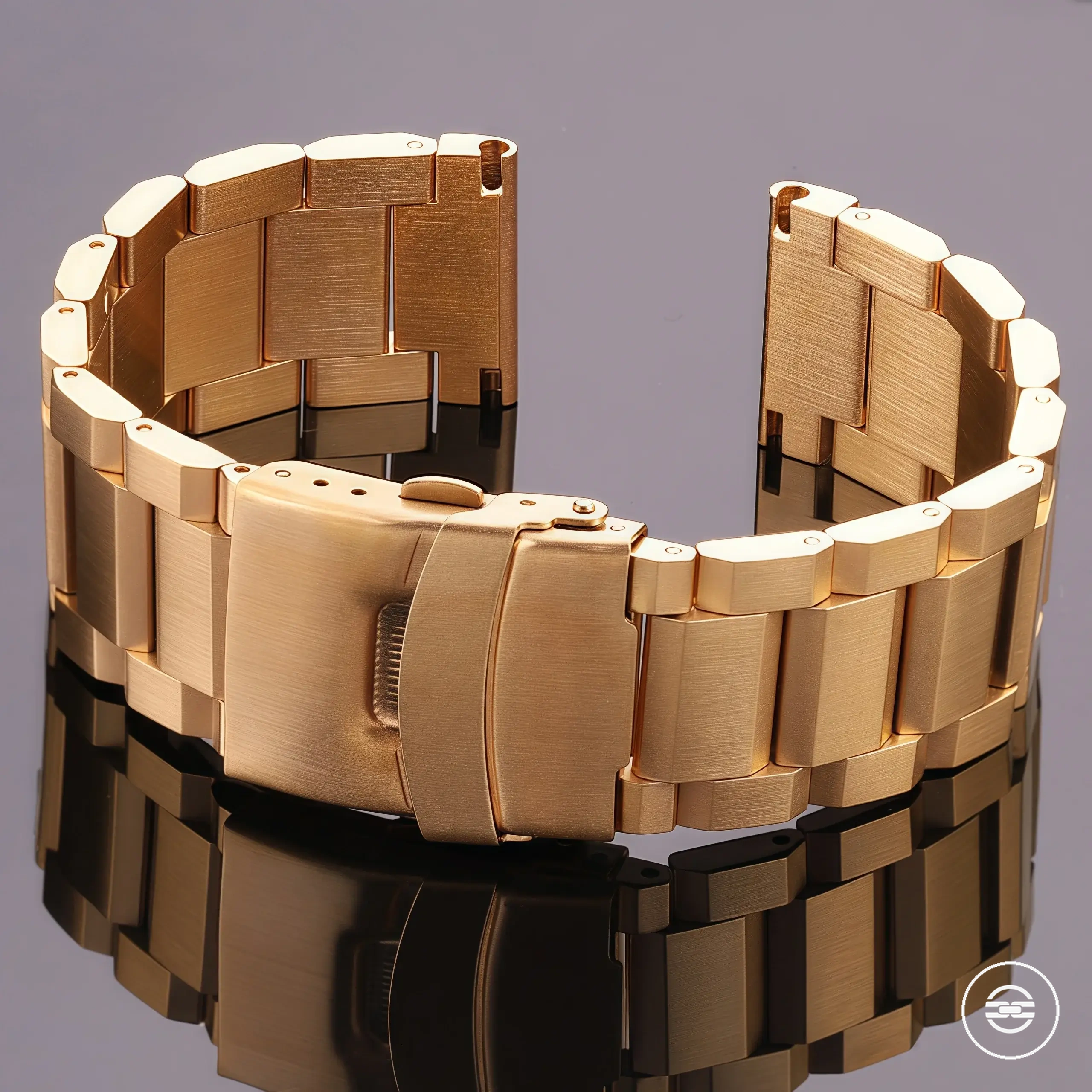
The products below are useful examples for comparing available options. Before buying, check that the compatibility criteria, key features, and product details match your needs.
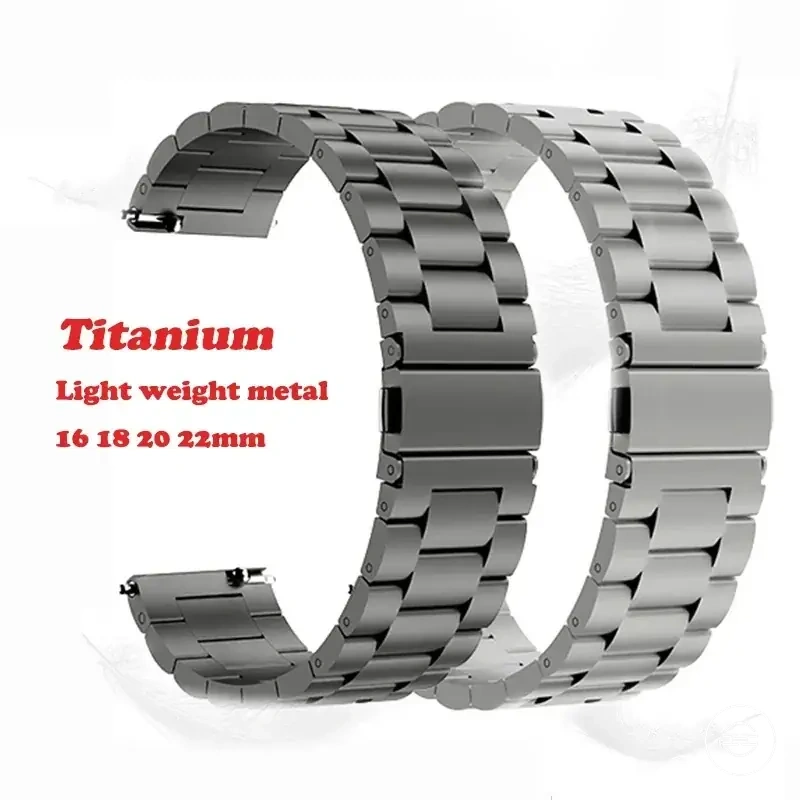
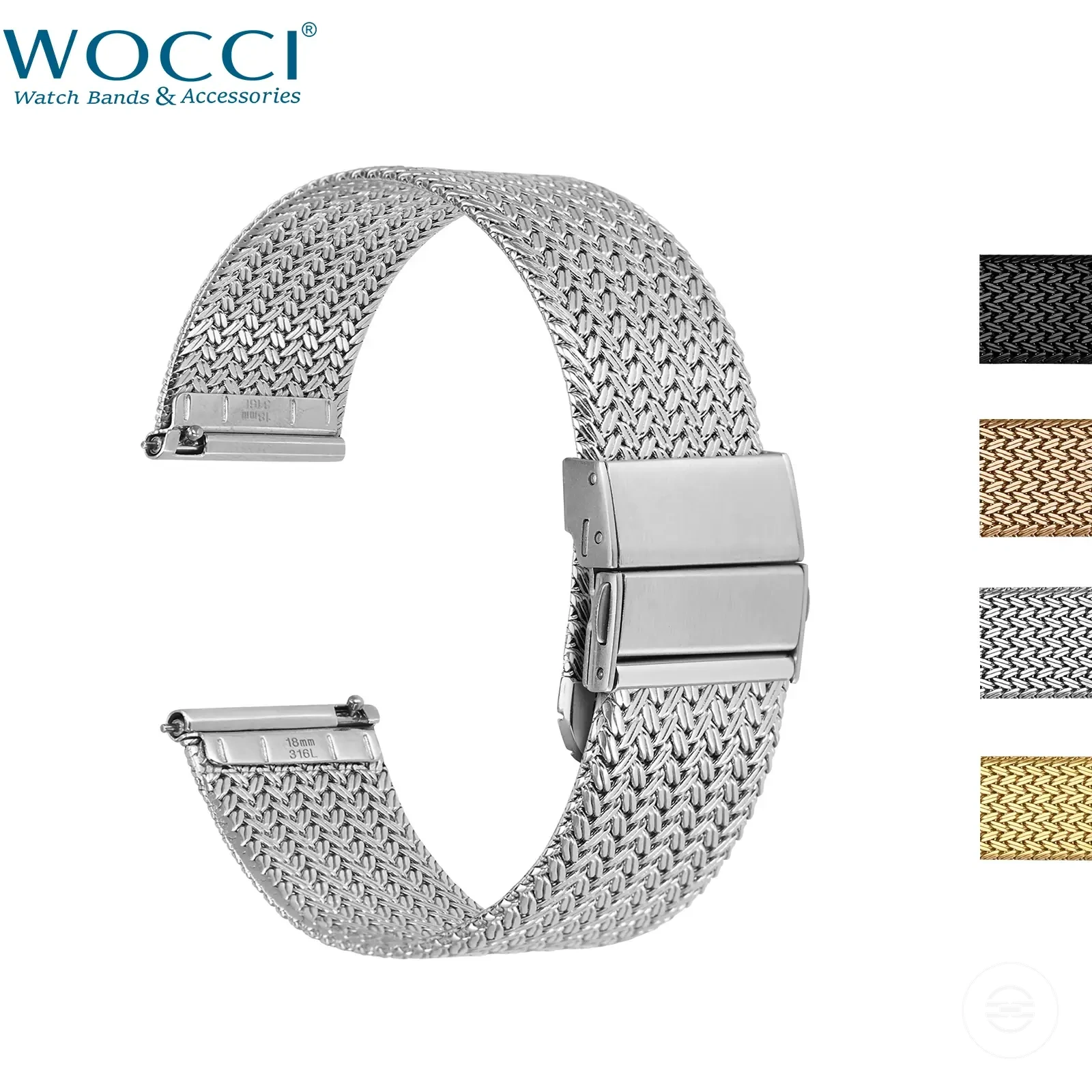
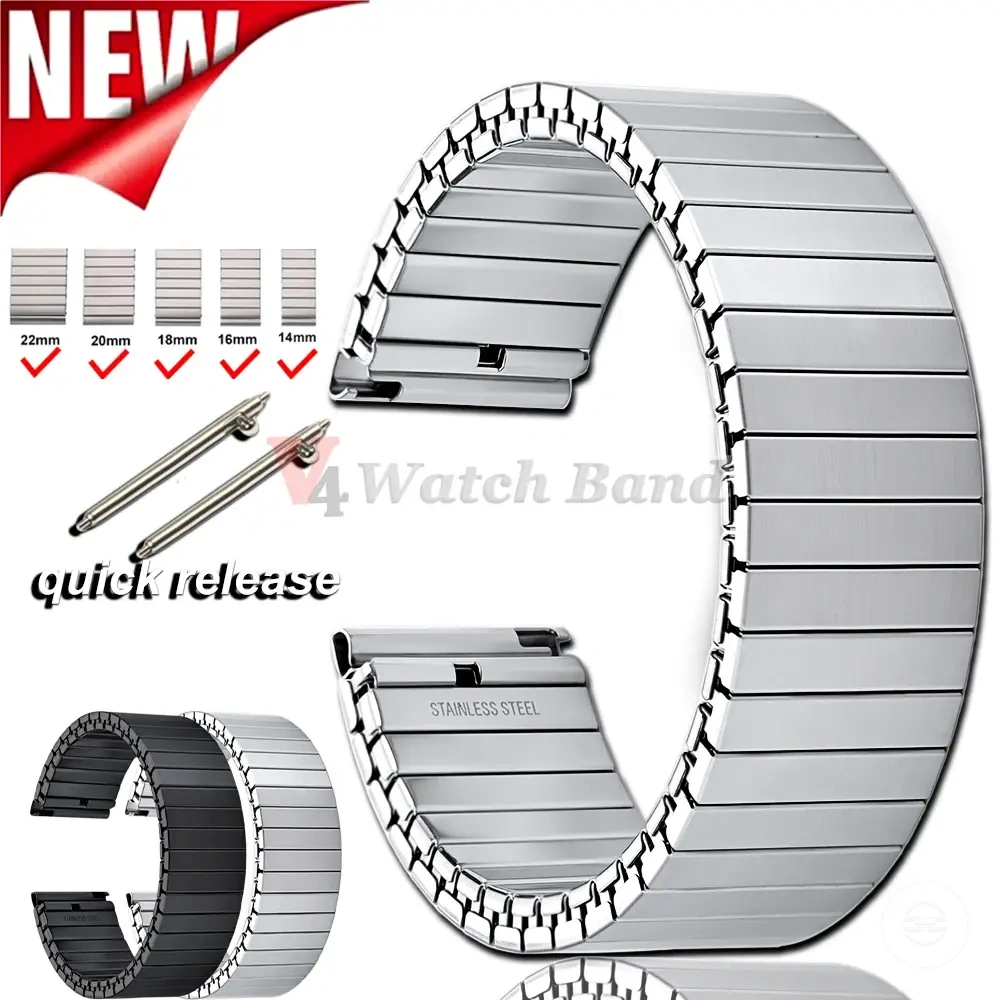
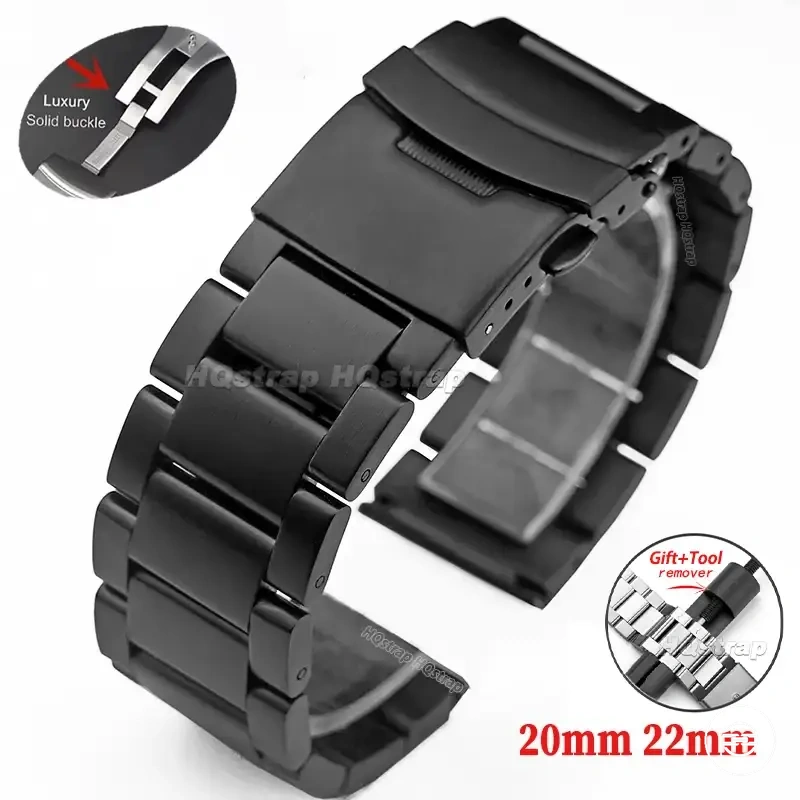
Review value signals before following external purchase options
Value depends on the fit and quality signals already checked, not on price alone. Construction quality, clasp confidence, and clear compatibility details help indicate whether a band is worth considering. Complete this value check before continuing to external purchase options.
A low price can be difficult to assess when listing clarity is weak or the included hardware is not specified. Review the price context alongside what is included, how clearly the band is described, and whether the external merchant states its return conditions. These details may reduce uncertainty around sizing risk and missing components. Confirm them on the external merchant page before proceeding.
- Price context: Compare the displayed price with the stated construction, finish, and included features rather than treating price as the only value signal.
- Construction quality: Check whether the listing provides clear quality cues that support expected durability and daily use.
- Clasp confidence: Verify that the clasp type and adjustment details are described clearly enough to assess fit and release risk.
- Included hardware: Confirm whether required links, spring bars, tools, or other listed components are included before relying on the offer.
- Return conditions: Review the external merchant's stated return conditions because sizing or compatibility uncertainty may affect buyer confidence.
- Listing clarity: Treat missing specifications, unclear images, or inconsistent descriptions as reasons to qualify the value assessment.
- External purchase caution: Recheck price, availability, delivery, and merchant terms on the external page because these details may change.
Cheap versus premium does not automatically mean poor versus good. A lower-priced band may still offer suitable value when its fit and construction cues are clear, while a higher price may reflect features that matter only if they improve durability, fit confidence, or long-term comfort. Use the cheap vs premium metal watch bands comparison to assess that trade-off.
When two similar bands appear suitable, compare their construction quality, clasp confidence, finish information, and listing clarity rather than relying on price alone. The stronger value signal is the option that provides clearer evidence for the fit, comfort, and use conditions already identified.
The final value check should confirm that the price context, included hardware, return conditions, and product details support the intended decision. Continue to external purchase options only after the remaining uncertainties are acceptable for the buyer's needs.
The products below are useful examples for comparing available options. Before buying, check that the compatibility criteria, key features, and product details match your needs.