
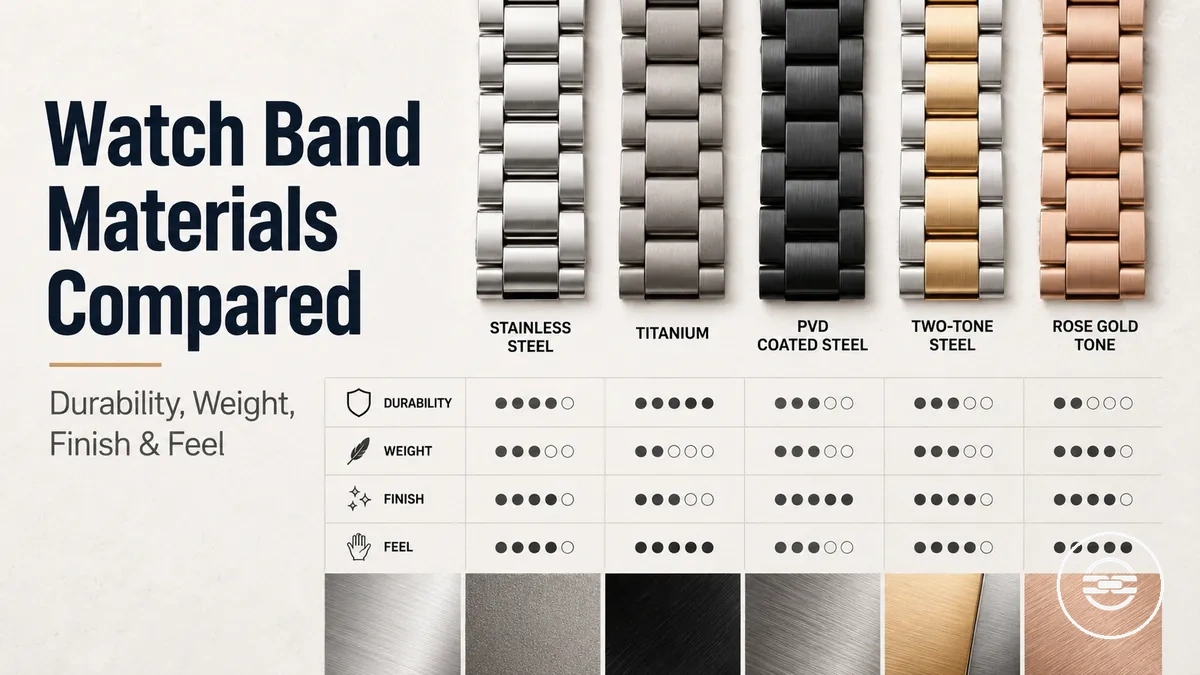
Metal Watch Band Materials Compared
Metal watch band materials should be compared by how they influence durability, weight, corrosion behaviour, wrist feel, skin sensitivity, and perceived quality. These characteristics can vary with the alloy, construction, finish, and intended use of the band, making material the primary decision variable.
For everyday wear, a stainless steel bracelet may offer a solid feel and practical resistance to moisture, although its long-term performance can vary with the alloy, surface finish, and maintenance. A titanium-style metal band may provide a lighter wearing experience, but the specification should confirm whether it is made from titanium or uses a titanium-style coating or construction. The most suitable material depends on expected wear conditions, preferred wrist feel, and verified material details.
The main trade-off is usually between durability, lightness, skin response, and exposure to moisture rather than one material being universally superior. Solid stainless steel bracelets often feel more substantial than lighter constructions, while titanium-style options may reduce perceived weight depending on their material and link design. If skin sensitivity is a concern, checking the stated alloy composition, nickel content where disclosed, and any hypoallergenic claim provides a more reliable basis for comparison than assuming all metal bands perform the same.
Comparing metal watch band materials by their construction, finish, and alloy creates a clearer buying decision than comparing products alone. The following sections examine how each material influences long-term wear, comfort, corrosion behaviour, and overall performance in different use conditions.
What Material Changes in a Metal Watch Band
Metal watch band material controls the core characteristics of a watch bracelet before finish or styling is considered. The annotated example below shows how alloy, density, construction, and surface treatment can influence weight, durability, corrosion behavior, skin feel, and perceived quality.
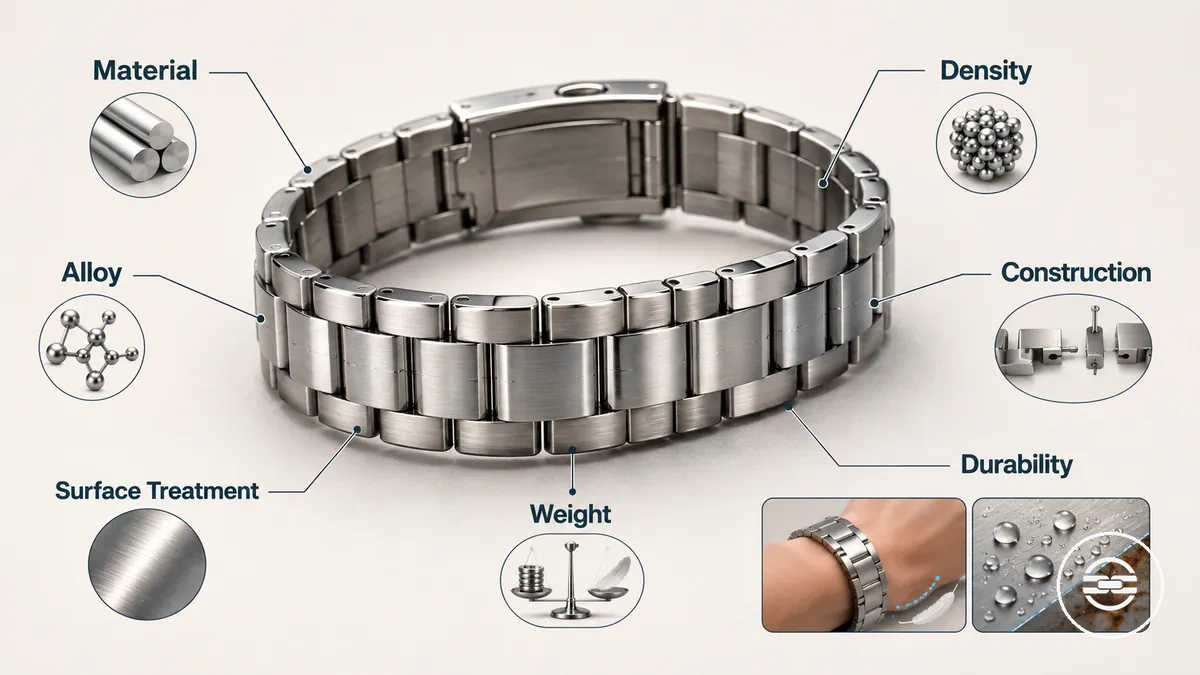
When two metal watch bands look similar, differences in material density, alloy, or link construction may still change how they feel and perform during use. Metal watch bands are watch bracelets made with linked or structured metal components, while their underlying material influences many user-visible characteristics.
Metal watch band material affects multiple practical and visible attributes. These effects also depend on construction, use conditions, and surface treatment.
- Material density influences overall weight and wrist feel.
- Alloy composition may affect durability and corrosion behavior under moisture exposure.
- Link construction can change flexibility and how the bracelet sits on the wrist.
- Clasp and link design may influence perceived quality and handling.
- Surface treatment can modify the surface feel during daily wear.
- Material, construction, and finish together shape how quality is perceived.
Finish and coating can modify appearance and surface feel, but they do not replace the underlying material context. These surface-level differences are covered separately under metal watch band finishes.
Stainless Steel Watch Bands
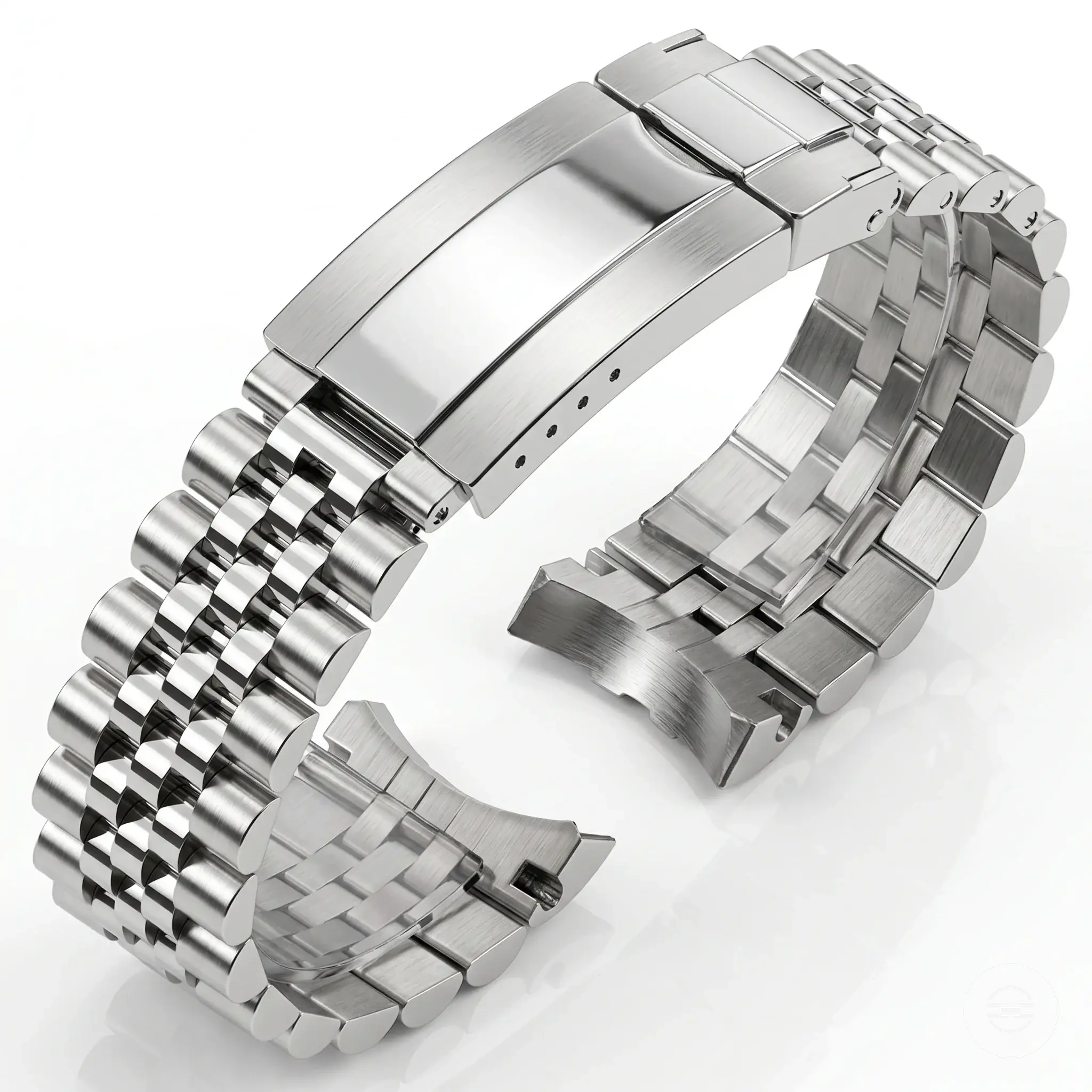
A stainless steel watch band is a common metal bracelet choice because it can provide durability, familiar weight, and broad style compatibility. The annotated example below labels visible quality cues around the links, clasp, side profile, and surface finish. Stainless steel remains common, but its quality varies with alloy, grade, link construction, surface quality, and clasp integration.
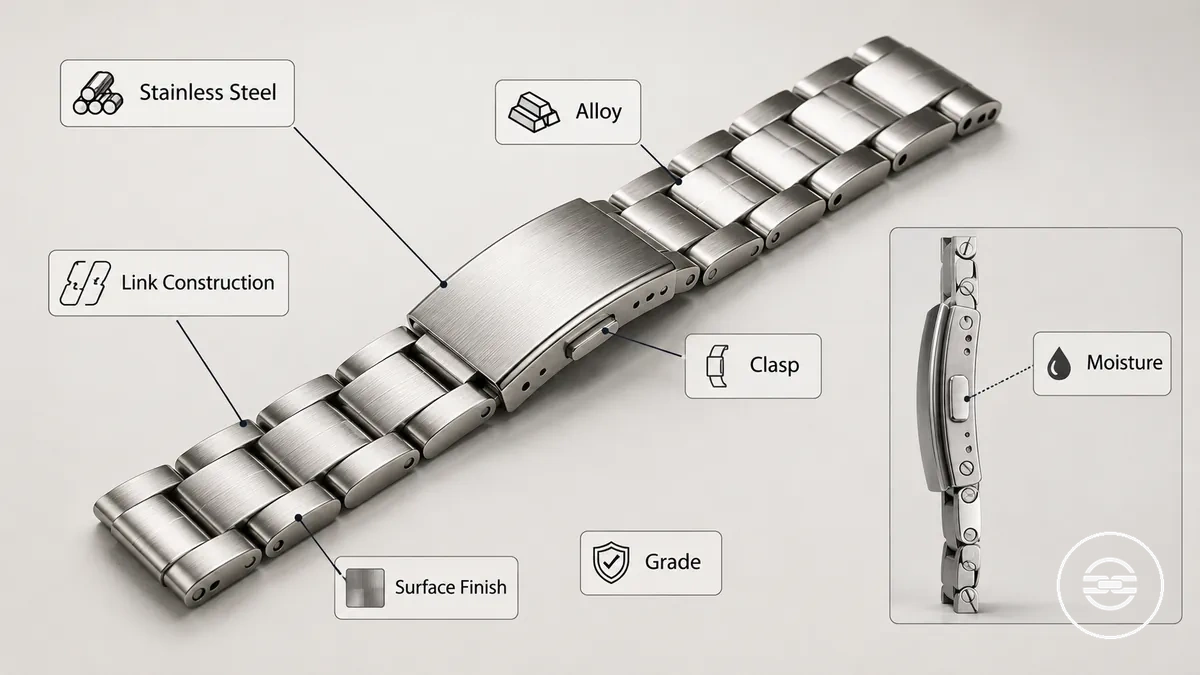
For daily wear, a stainless steel bracelet may provide reliable performance when its alloy, construction, and finish suit the intended conditions. Moisture exposure, cleaning habits, and the way the links and clasp are assembled can influence long-term appearance and wrist feel. These factors shape daily-wear reliability rather than the stainless steel label alone.
The following quality signals help distinguish material claims from construction details. Each signal should be checked in context because stainless steel watch bands can differ in grade, finishing, and assembly.
| Quality signal | What to check | Why it matters |
|---|---|---|
| Alloy or grade | Clear alloy or grade wording | Corrosion resistance and long-term wear may vary by alloy. |
| Link construction | Solid links or folded links | Construction can influence bracelet feel and perceived quality. |
| Surface finishing | Brushed, polished, or mixed surfaces | Surface quality can affect scratch visibility during regular use. |
| Clasp integration | Alignment, closure, and consistent assembly | Clasp integration can influence handling and wrist feel. |
| Moisture exposure | Cleaning and drying after exposure | Care conditions may influence staining, appearance, and corrosion resistance. |
A stainless steel watch band should not be treated as automatically premium simply because it uses stainless steel. Corrosion resistance, scratch visibility, wrist feel, surface quality, and long-term durability can vary with alloy, grade, link construction, finishing, moisture exposure, and maintenance.
Solid Stainless Steel Bracelets
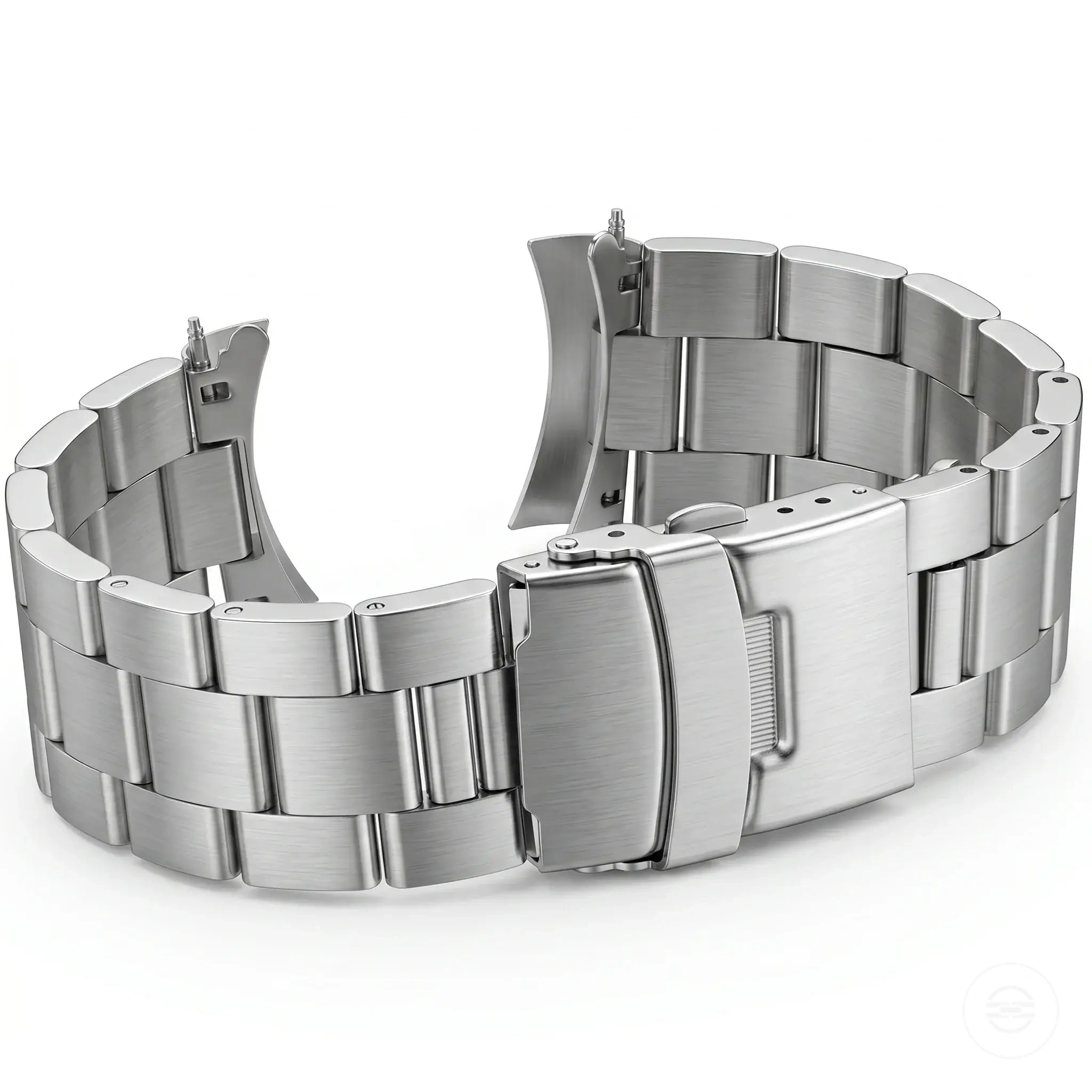
A solid stainless steel bracelet uses solid links rather than hollow links or folded links as its main construction approach. The annotated example below highlights visible differences in link thickness, the bracelet underside, and the end-link area. This distinction concerns bracelet construction rather than the stainless steel material itself.
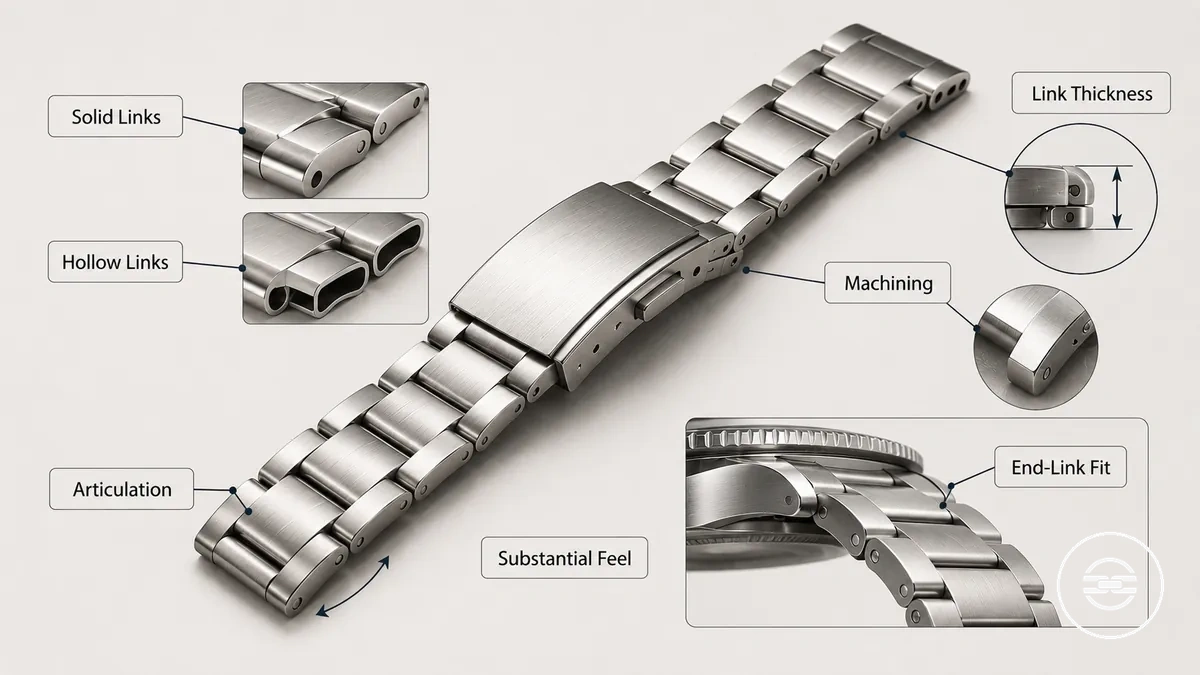
When bracelets are compared side by side, solid links may create a more substantial feel because link solidity, machining, articulation, and end-link fit can affect weight, rigidity, wrist comfort, and long-term wear. Construction quality still varies, so solid links do not indicate higher perceived quality by themselves. A solid bracelet may suit users who prefer a substantial feel, while hollow links or folded links may better suit those prioritising the lightest wrist feel.
| Construction cue | Practical effect |
|---|---|
| Solid links | May increase weight and rigidity while creating a more substantial feel. |
| Hollow or folded links | May reduce weight, with wrist feel depending on machining, articulation, and end-link fit. |
Titanium Style Watch Bands
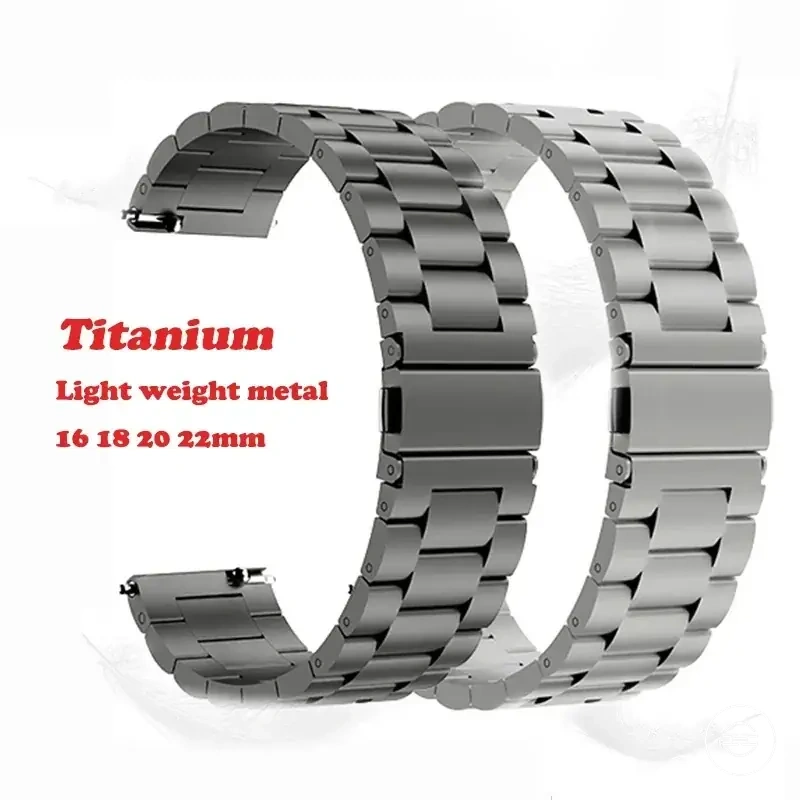
A titanium-style watch band is a metal bracelet option that is often selected for its lightweight feel, darker tone, and different wearing characteristics compared with stainless steel. The term titanium-style does not confirm the underlying material specification, so appearance alone should not be treated as verification of titanium construction.
When reducing wrist weight is the priority, a titanium-style watch band may feel more comfortable because materials with lower density can create a lighter bracelet. Comfort, corrosion resistance, and long-term durability still depend on the verified material specification, alloy, and construction rather than marketing wording alone, making lightweight comfort conditional on the actual material.
Surface appearance can also vary because coating and finishing influence darker tone, surface wear, and scratch visibility. A titanium-look band may resemble titanium visually while using different base materials or coatings, so scratch behaviour and long-term appearance can vary between products.
- Weight: A lower-density material may provide a lighter wrist feel.
- Darker tone: Colour can vary with the material specification and coating.
- Scratch visibility: Surface finish and coating may influence how wear appears over time.
- Corrosion resistance: Performance can vary with the underlying material and moisture exposure.
- Skin suitability: Comfort depends on the verified material specification and individual sensitivity rather than titanium-style wording alone.
Stainless Steel vs Titanium Watch Bands
Choosing between a stainless steel vs titanium watch band depends on which characteristics matter most in daily wear. Stainless steel often provides a more substantial feel, while titanium-style options are commonly chosen for lighter weight. The better choice depends on the wearer’s priorities, including weight, finish, skin response, construction, and material specification.
The comparison below organises the material decision by practical criteria, including durability, scratch visibility, corrosion resistance, finish behavior, and value perception.
| Criterion | Stainless steel tendency | Titanium-style tendency | Decision note |
|---|---|---|---|
| Weight | Usually heavier with a substantial feel | Often lighter because of lower density | Choose based on wrist comfort preference |
| Durability | Often associated with robust daily wear | Depends on material specification and construction | Construction influences long-term performance |
| Scratch visibility | Finish may show wear differently | Coating and finish can affect visible scratches | Surface treatment changes appearance over time |
| Corrosion resistance | May be suitable for everyday moisture exposure | May provide corrosion resistance depending on specification | Verify the underlying material |
| Skin response | Varies by alloy and individual sensitivity | Depends on verified material and individual sensitivity | Avoid assuming hypoallergenic performance |
| Finish behavior | Often available in brighter finishes | Commonly associated with a darker tone | Appearance depends on finish and coating |
| Value perception | Often viewed as a familiar material choice | May carry a different price perception | Consider budget alongside material specification |
The table highlights trade-offs rather than a universal preference. Stainless steel may suit wearers who prefer familiar weight and a substantial feel, while titanium-style bands may appeal to those prioritising lightweight comfort. Scratch visibility, finish behavior, corrosion resistance, and durability can vary with construction, coating, and verified material specification.
If a substantial feel matters most, stainless steel may be more suitable. If lightweight comfort is the priority, a titanium-style option may be preferable. When reducing irritation risk matters, rely on the verified material specification rather than marketing wording alone because skin response can vary with alloy composition and individual sensitivity.
Durability and Scratch Resistance
Durability describes how well a watch band withstands structural wear, while scratch resistance describes how well its surface resists marks from contact and abrasion. A band can remain structurally sound while still developing visible wear, so durability and scratch resistance should be assessed separately.
Hardness may influence how readily scratches form, while coating and surface finish can change how clearly those scratches appear. Brushed or matte surfaces may make minor marks less noticeable, whereas polished surfaces can make changes in reflection more visible. Coated finishes may show contrasting wear if the outer layer is marked, and link construction can affect resistance to dents, deformation, and loss of rigidity.
For stainless steel and titanium-style bands, visible wear depends on material hardness, coating, surface finish, link construction, and wearing conditions rather than the material name alone.
Weight and Wrist Balance
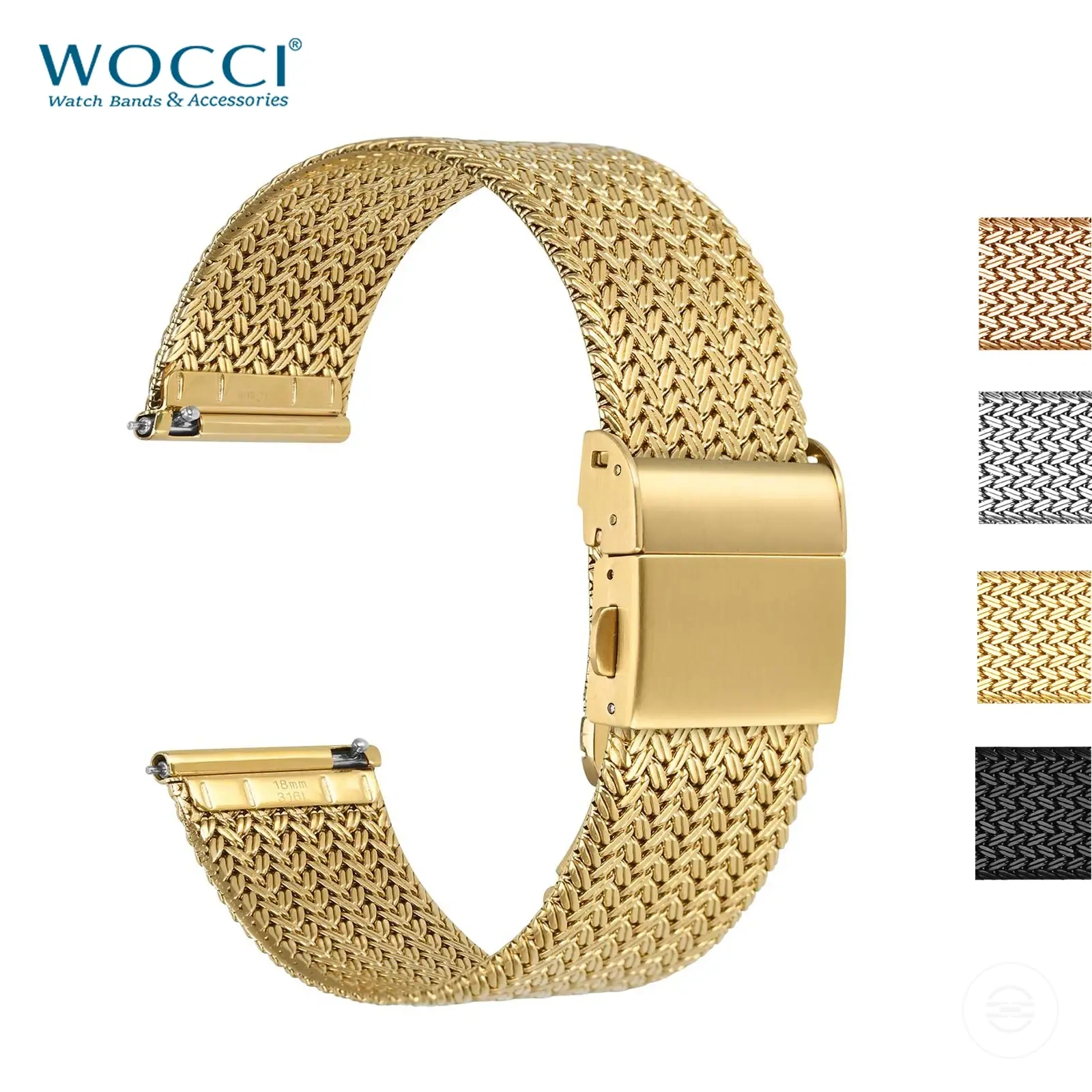
When comparing a heavy solid bracelet with a lighter titanium-style or mesh-style metal band, wrist comfort may differ even when both fit the same wrist. Weight alone does not determine comfort because perceived weight depends on wrist balance.
Material density is only one factor affecting wrist feel. Link size, taper, clasp mass, and watch-head weight can shift the balance point, which may influence perceived heaviness, sliding, or fatigue during daily wear. A balanced bracelet may feel more stable, while uneven weight distribution can create a top-heavy feel even when the band material is lighter.
Weight perception depends on more than the metal alone, so compare these balance factors:
- Density: Higher or lower density can change overall heft without determining comfort by itself.
- Link size and taper: Link construction can influence how evenly weight is distributed across the wrist.
- Clasp mass: A heavier clasp may improve or reduce wrist balance depending on the bracelet design.
- Watch-head weight: A heavier watch head may increase sliding or fatigue when the band does not balance it effectively.
Corrosion Resistance and Moisture Exposure
Metal watch bands can rust or develop corrosion under certain conditions, depending on the material, alloy, coating, moisture exposure, and care. Stainless steel often provides corrosion resistance, but it should not be treated as rust-proof.
Corrosion resistance varies with the alloy and any surface treatment applied to the band. A coating may reduce direct moisture contact, while scratches or finish wear can expose the underlying material and increase the chance of staining or oxidation.
Sweat, salt, dirt buildup, and longer moisture duration can leave residue that increases rust risk and maintenance need. Recurring rust or grime may involve cleaning habits as well as material choice, and cleaning may reduce surface residue without reversing established corrosion.
For recurring residue or care concerns, see how to clean metal watch bands.
Metal Watch Band Weight and Daily Feel
Two metal watch bands can feel different during a full day of wear even when they use similar materials. Metal watch band weight contributes to daily feel, but balance, bracelet construction, and watch-head weight also influence wrist comfort. Daily feel depends on how these factors work together rather than on weight alone.
Material density affects overall heft, while bracelet construction shapes how that weight is experienced on the wrist. Link size, taper, and clasp weight can influence balance, pressure, sliding, and breathability during extended wear. Wrist size and watch-head weight may also change how comfortable the same bracelet feels throughout the day.
The following comparison shows how common construction patterns can influence daily feel:
| Construction pattern | Feel tendency | Watch-out condition |
|---|---|---|
| Mesh-style | Often provides a flexible feel with good breathability. | Daily comfort may vary if watch-head weight creates uneven balance or sliding. |
| Link bracelet | Usually offers a balanced, solid feel. | Link size, taper, and clasp weight can influence pressure and wrist comfort. |
| Solid bracelet | Often feels more substantial because of its construction. | Greater heft may increase pressure during long periods of wear for some users. |
| Titanium-style light metal | Often feels lighter while maintaining a metal bracelet design. | All-day comfort still depends on bracelet construction, wrist size, and watch-head weight. |
A mesh bracelet made from stainless steel may feel more breathable than a solid bracelet made from the same material because its construction distributes contact differently. Likewise, two link bracelets made from similar metals can produce different daily feel when taper, clasp weight, or bracelet construction changes how weight is balanced across the wrist.
Skin Sensitivity and Nickel Exposure
A hypoallergenic claim may lower concern for some users, but no watch band material should be assumed to prevent irritation in every case. Skin sensitivity can depend on nickel exposure, coating condition, sweat, fit, and individual skin response, so material risk should not be treated as a medical diagnosis.
Nickel exposure may vary with the metal composition and the condition of any protective finish. Coating wear can expose more of the underlying material, while a rough or damaged surface may increase friction during contact. Stainless steel and titanium-style materials can differ by specification, so a hypoallergenic claim is more useful when supported by clear material information.
A practical comfort check should consider both the material claim and the conditions where the band touches the skin:
- Material specification: Check whether the alloy information addresses nickel content rather than relying only on a broad hypoallergenic claim.
- Coating condition: Look for coating wear, scratches, or exposed areas that may change skin contact.
- Surface smoothness: Rough edges or uneven finishes may increase friction and irritation for sensitive skin.
- Moisture retention: Consider whether sweat remains trapped between the band and wrist during wear.
- Fit and pressure: A tight or poorly balanced band may increase rubbing and reduce comfort.
Sweat, moisture retention, and residue on the contact surface may affect comfort even when the material is not the only concern. A consistent cleaning routine may reduce buildup, but persistent irritation should be evaluated through material, fit, cleaning, and skin response together.
For further clarification on cautious selection factors, see metal watch bands for sensitive skin.
Choosing a Metal Watch Band Material by Wear Need
Choose a metal watch band material by matching your wear need to the conditions it will face rather than assuming one material suits every situation. Durability, lightweight comfort, sensitive skin concerns, moisture exposure, and quality expectations each change which material attributes matter most. The criteria matrix below organises those decisions by real wearing conditions.
The matrix provides a practical selection filter rather than a product ranking. It connects each wear need with a material signal, a trade-off, and a safer decision direction.
| Wear need | Material signal | Trade-off | Safer decision direction |
|---|---|---|---|
| Durable daily wear | Stainless steel with solid construction | May increase overall weight | Prioritise durability and construction quality for regular use. |
| Lightweight all-day wear | Titanium-style material | A lighter feel may vary with bracelet construction and balance | Select this direction when lower weight and comfort are higher priorities. |
| Sensitive skin or nickel concern | Clear material specification and coating condition | Comfort also depends on cleaning and individual skin response | Review material information instead of relying on broad hypoallergenic claims. |
| Moisture-heavy use | Corrosion-resistant material and suitable construction | Moisture exposure can still increase cleaning needs and affect the finish | Consider material choice together with moisture conditions and routine care. |
| Quality expectation | Construction quality and finishing | Premium construction is separate from the material alone | Compare build quality alongside the material attribute. |
The matrix shows that every material choice involves a trade-off rather than a universal winner. Stainless steel may suit durability-focused wear, while titanium-style options may better match lightweight preferences. Moisture exposure, sensitive skin, bracelet construction, coating condition, and cleaning routine should be considered alongside the material itself.
Use these decision criteria to separate material choice from finish, cleaning requirements, and premium construction details. For further comparison of value and build quality, see cheap vs premium metal watch bands.
Here are product examples that may make comparison easier. Before buying, always review the compatibility criteria, essential features, and product details.
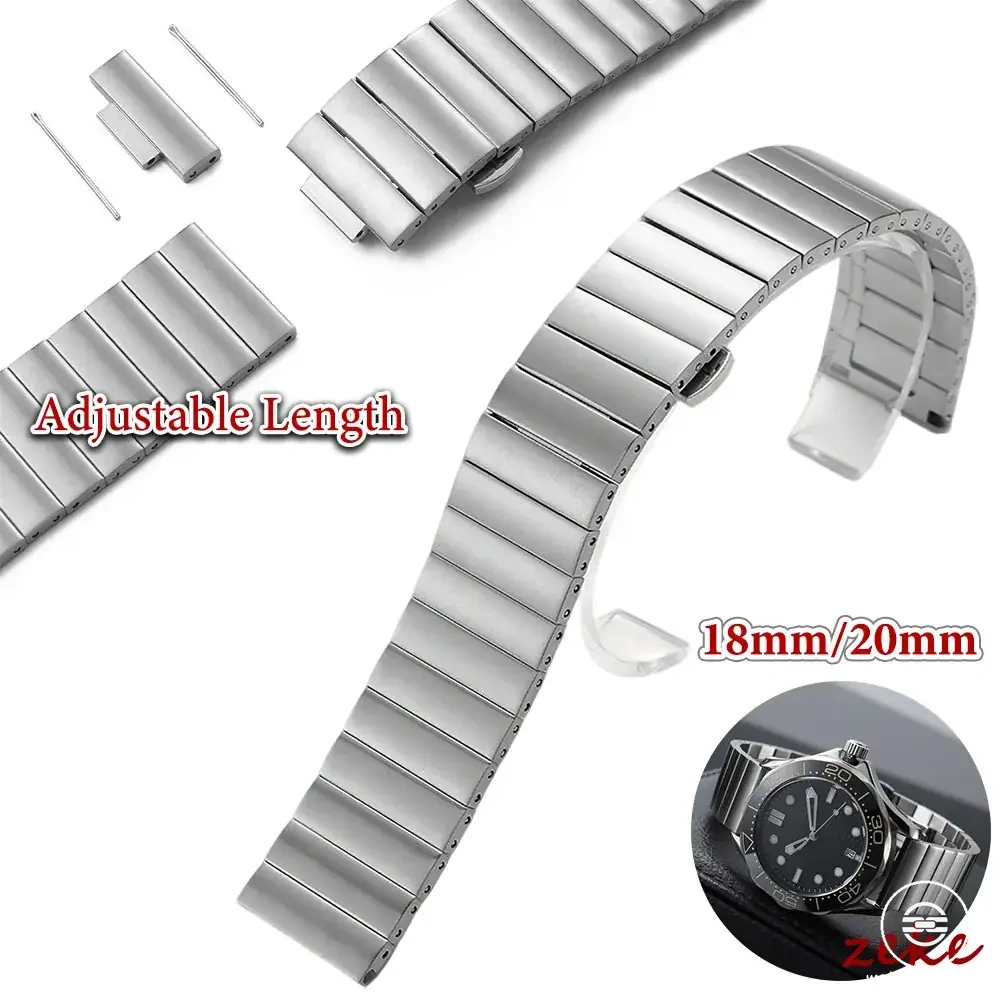
Durable Daily Wear
Durable daily wear depends on how well a metal watch band handles repeated movement, contact, and changing conditions during everyday use. Link solidity and construction influence structural stability, while scratch visibility and moisture exposure affect how wear appears over time. Material fit therefore depends on construction, finish, moisture conditions, and maintenance tolerance.
Stainless steel quality may support daily durability when the links, pins, and clasp are suited to regular use, but material alone does not determine wear control. A finish that shows scratches readily may appear worn sooner even when the bracelet remains structurally sound, while frequent moisture exposure may increase maintenance needs. A metal watch band is a stronger fit when its link solidity, surface finish, and upkeep demands match the wearer’s daily routine.
Lightweight All-Day Wear
Lightweight all-day wear depends on reducing wrist fatigue without losing stability during normal use. Material density can lower perceived weight, but link size, taper, clasp mass, and watch-head balance also influence how the bracelet feels throughout the day. Lightness contributes most when the complete watch-and-band setup remains balanced.
When evaluating comfort, consider whether material density suits the intended wearing condition rather than focusing on low weight alone. Link size and taper may affect weight distribution, while clasp mass and watch-head balance can influence sliding and stability. A light metal band may improve comfort when these factors work together, but comfort still depends on perceived weight, stability, and individual wear conditions.
Sensitive Skin or Nickel Concern
Sensitive skin or nickel concern should be assessed through both the material specification and the contact condition rather than through broad material claims alone. Nickel content, coating wear, sweat retention, and cleaning frequency may influence irritation risk, while titanium-style claims and stainless steel grade require clear specification. Lower-risk choices therefore depend on the material claim, coating condition, and contact environment.
Use these local selection signals when comparing metal watch band materials:
- Check whether the material specification clearly identifies nickel content, titanium-style claims, or stainless steel grade.
- Review coating wear because a changing surface condition may alter skin contact over time.
- Consider whether sweat retention may increase prolonged contact during regular wear.
- Match cleaning frequency to the wearing environment to help maintain surface condition and comfort.