
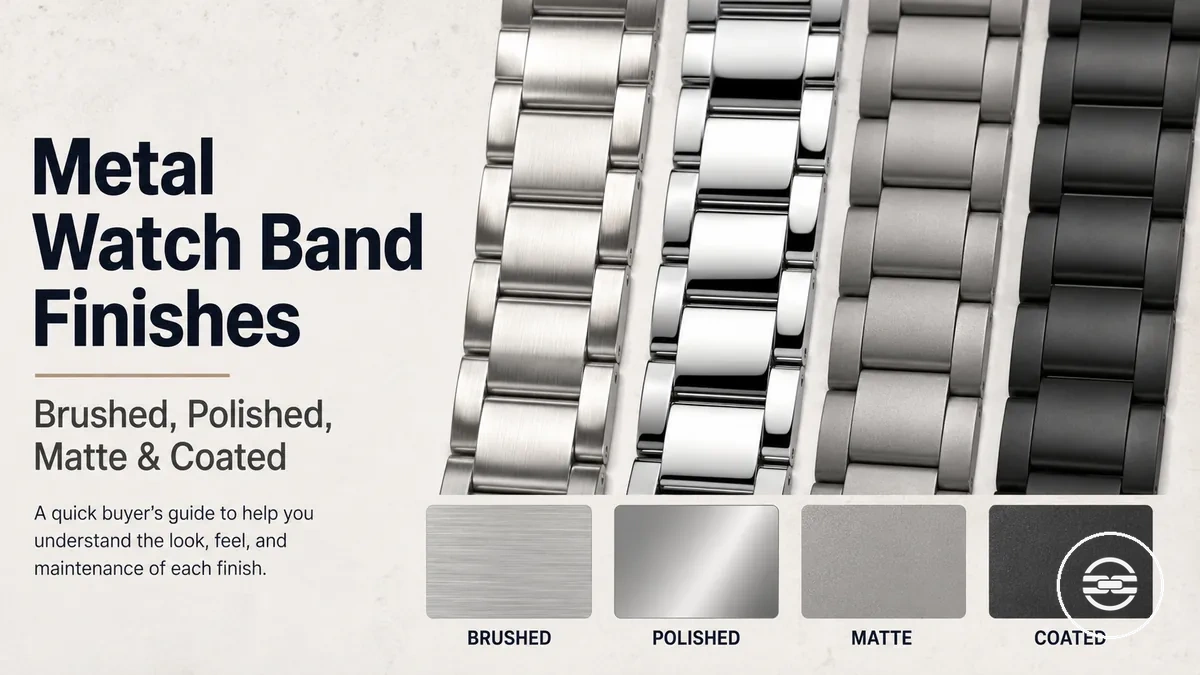
Metal Watch Band Finishes for Surface Texture, Colour, and Wear
Metal watch band finishes are surface treatments that define the visible texture, reflection, and colour of a watch bracelet. A finish may be brushed, polished, matte, or coated, shaping both the appearance of the band and how its surface may change through everyday wear.
Surface texture influences how a metal watch band reflects light and how noticeable minor marks may become over time. A polished finish creates stronger shine, while brushed and matte finishes produce a softer reflection. Scratch visibility, coating performance, and long-term appearance can vary with the base metal, coating quality, use conditions, and individual wear patterns.
Finish describes the visible surface decision layer, while base metal refers to the material beneath that surface. A finish does not determine band sizing, clasp fit, or watch compatibility, and the same material may be available with different surface treatments and colour tones.
Common finish options include silver, gold tone, black, and two tone, each paired with different surface textures and visual styles. Their appearance, colour retention, and wear characteristics may differ depending on the coating, underlying material, and daily use, making finish selection a balance of style, scratch visibility, and expected wear rather than a universal durability ranking.
What a metal watch band finish changes
A metal watch band finish changes the surface texture, reflection, colour tone, and how visible everyday wear may become over time. It does not change the underlying function of the band itself. Within the broader category of metal watch bands, the finish is the visible surface treatment that shapes how the bracelet looks and how it may respond to regular use.
What a metal watch band finish changes is easier to understand when surface features are compared side by side. The image below highlights how surface texture, reflection, colour tone, and visible wear can differ across common finishes while keeping the same overall band design.
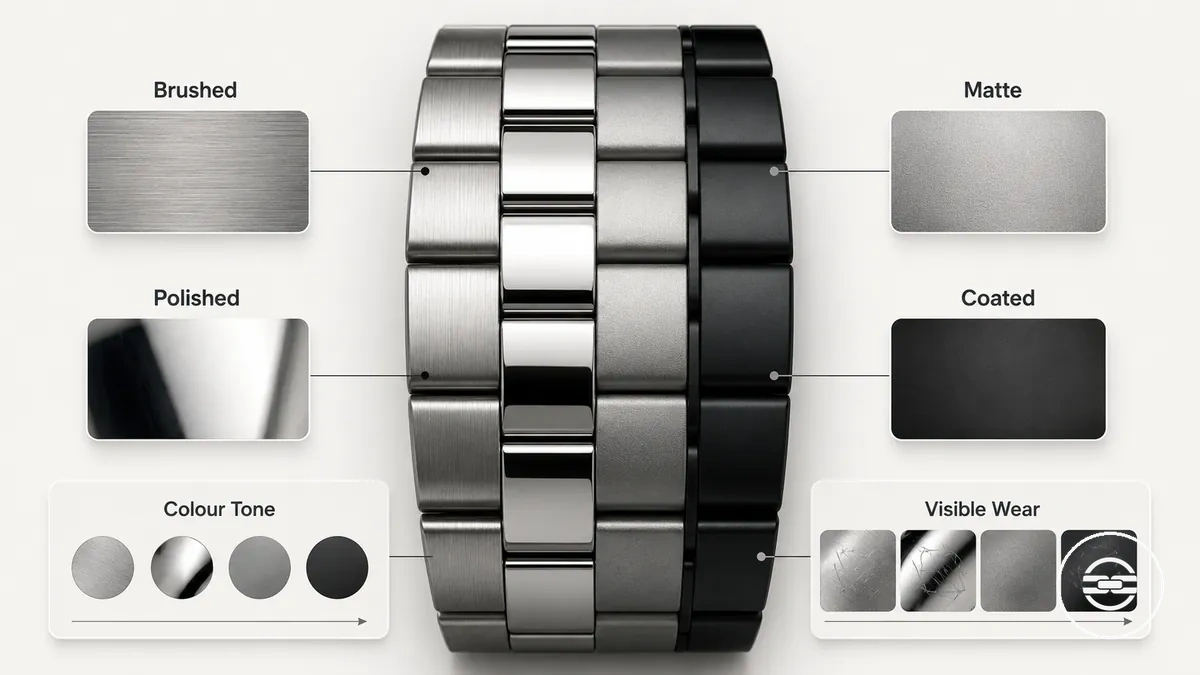
- Surface texture: Brushed, polished, matte, and coated finishes create different visual and tactile surface characteristics.
- Reflection: Polished finishes produce more shine, while brushed and matte finishes reduce reflection.
- Colour tone: Silver, gold tone, black coated, and two tone finishes change the appearance of the outer layer.
- Fingerprint visibility: Surface treatment may influence how easily fingerprints become noticeable during everyday use.
- Scratch visibility and care: Minor marks and maintenance needs can vary depending on the finish, coating quality, and wear conditions.
A finish changes the surface experience but does not automatically determine base-metal quality. For example, two metal watch bands made from the same base metal may display different colour tones, reflection, and visible wear because they use different surface treatments.
Finish versus metal material on a watch band
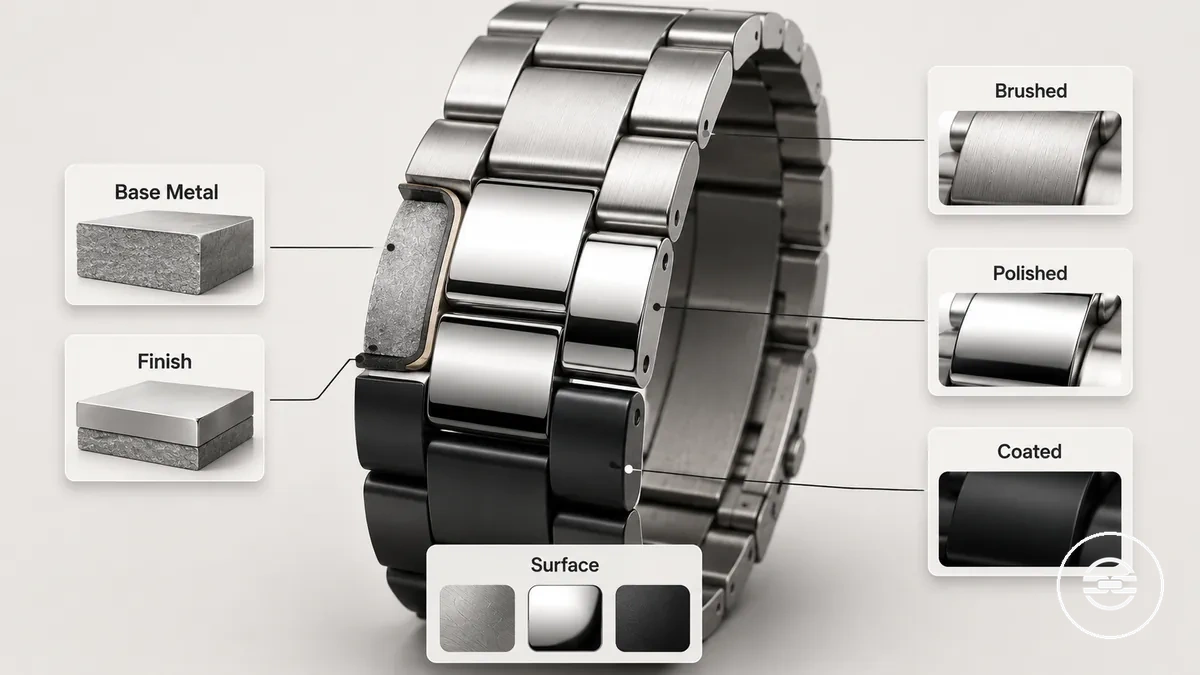
A finish is the treated or visible surface of a metal watch band, while the material is the underlying base metal or alloy. Stainless steel identifies the material, whereas coating, polish, brushing, and plating describe surface treatments that change the appearance of the surface rather than the composition of the band.
Finish versus metal material on a watch band becomes clearer when the visible layer is separated from the underlying metal. The diagram below distinguishes the base metal from the visible finish and shows how brushed, polished, and coated surfaces can create different visual results. Durability, weight, colour, and visible wear may depend on both the material and the finish rather than on either one alone.
| Material | Finish |
|---|---|
| Defines the composition of the base metal or alloy, such as stainless steel. | Defines the visible surface through coating, polish, brushing, or plating. |
| May influence weight and core material characteristics. | Changes surface appearance, reflection, and colour. |
| May contribute to overall wear characteristics. | May affect scratch visibility and how everyday wear appears. |
| Care depends on the underlying metal. | Care may vary with the surface treatment and coating condition. |
For example, the same stainless steel watch band can appear brushed, polished, matte, or plated while retaining the same base metal underneath. For a broader comparison of underlying metals rather than surface treatments, see metal watch band materials.
Main surface finishes on metal watch bands
A surface finish is the visible treatment applied to a metal watch band that shapes its appearance, tactile feel, and wear visibility. Common finish families include brushed, polished, matte, satin, PVD, DLC, and plated finishes, each creating a distinct surface look while the underlying base metal remains the same.
Main surface finishes on metal watch bands are easier to compare when viewed side by side. The image below highlights how each finish family differs in visible surface look before the table summarizes practical characteristics.
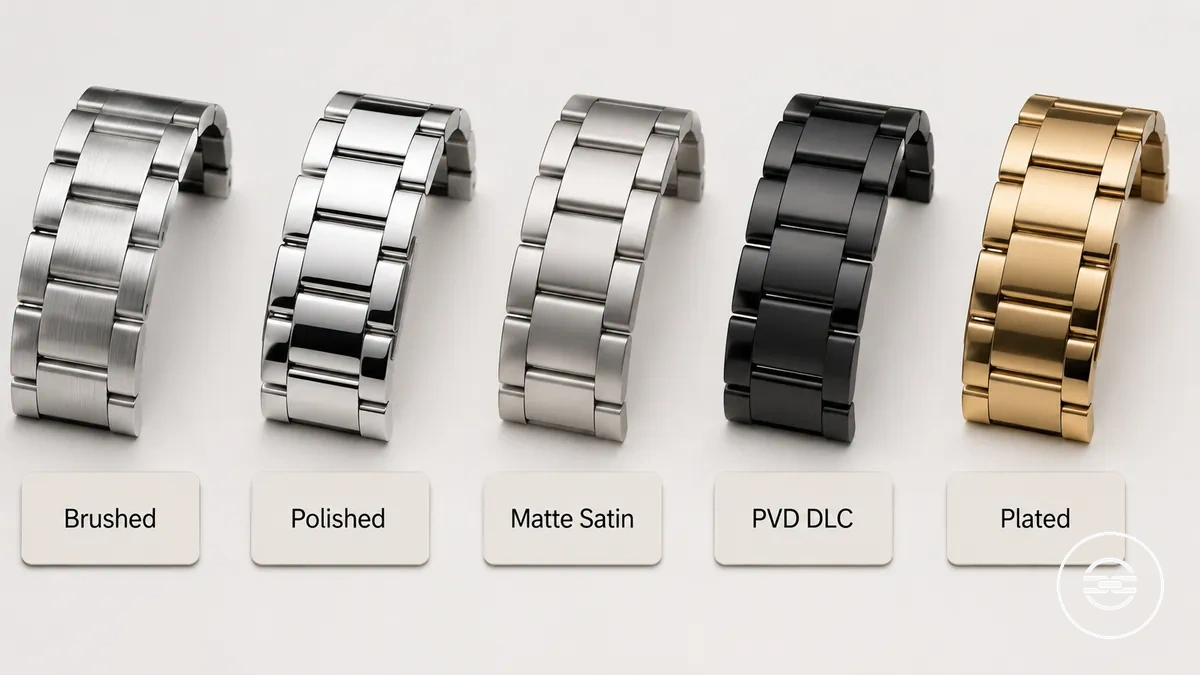
| Finish type | Surface look | Wear visibility | Care note |
|---|---|---|---|
| Brushed | Textured finish with low shine | May make minor marks less noticeable | Cleaning or refinishing may follow the brushing direction. |
| Polished | Mirror-like shine | Reflections may make surface marks easier to notice | Careful cleaning can help maintain the glossy appearance. |
| Matte or satin | Low reflection with a soft surface look | Wear visibility can vary with texture and everyday use | Care sensitivity depends on the surface treatment. |
| PVD or DLC coated | Coloured or dark coating over the surface | Visible wear may vary with coating condition and use | Avoid abrasive cleaning that may affect the coating. |
| Plated | Decorative metallic surface layer | Edge wear may become more noticeable over time | Care requirements depend on the plating and everyday use. |
Surface appearance, shine, wear visibility, and care sensitivity can vary with the finish, coating condition, underlying base metal, and everyday use.
Brushed finishes and visible wear
A brushed finish is a surface texture with fine directional lines that reduce glare and can make fine scratches and fingerprints less noticeable than a highly polished surface. The brushing pattern diffuses reflected light, creating a softer appearance while preserving the underlying metal. Brushed finishes can still develop wear, particularly in high-contact areas, but the line direction may help blend everyday marks into the surrounding texture.
For example, a brushed stainless steel watch band may continue to look more even after regular daily use because light surface marks can follow the existing brushing pattern. In contrast, a polished finish often reflects light more strongly, which may make similar wear easier to notice, while the appearance of scratches and fingerprints can still vary with the material, coating, and everyday use.
Polished finishes and reflective shine
A polished finish is a high-reflection surface that creates reflective shine, a mirror-like surface, and a refined dress appearance. The smooth finish reflects light evenly, which increases glare and can make fingerprints, smudges, and micro-scratches easier to notice during everyday wear.
For example, a polished metal watch band can complement formal clothing by producing a bright, high-polish look. Light surface marks may be reduced through refinishing when the base material and any coating allow it, while the final appearance can still vary with the metal, coating, and everyday wear.
Matte and satin finishes
A matte finish and a satin finish are low shine surface options with less light reflection than highly polished metal. A matte finish usually has a more muted texture, while a satin finish often adds a soft sheen that can increase perceived colour depth. Manufacturers may use these terms differently, so the visible finish can vary between watch bands.
For example, a satin finish may reflect slightly more light than a matte finish while making fingerprints less prominent than a mirror-like surface. A matte surface is not necessarily a black coated finish unless a coating creates that appearance, and the visibility of dark finish wear can vary with the material, coating, and everyday use.
PVD, DLC, and plated coatings
PVD, DLC, and plated coating finishes add a colour layer or alter surface hardness over a base metal. Their performance depends on the coating type, coating thickness, application quality, and the material beneath the coating layer.
PVD can provide a coloured outer layer, while DLC may offer greater surface hardness depending on how it is applied. A plated coating adds a decorative layer that may show edge wear, clasp wear, or base-metal exposure as the finish wears. Coating quality affects finish performance, but it does not replace the quality of the base metal.
Brushed vs polished finishes for scratches, glare, and repair
A brushed finish usually makes fine scratches less noticeable, while a polished finish reflects more light and often shows small marks more clearly. Brushed finishes are commonly chosen for daily wear, whereas polished finishes are often preferred for a high-shine look, although the visible result can vary with the material, coating, and surface condition.
| Factor | Brushed finish | Polished finish |
|---|---|---|
| Scratches | Usually reduces the visibility of fine scratches because the surface texture diffuses reflected light. | Often makes fine scratches easier to notice on a reflective surface. |
| Glare | Lower glare in bright light. | Higher glare from stronger light reflection. |
| Fingerprints | Fingerprints are often less noticeable. | Fingerprints are usually more visible. |
| Repair | Repair or refinishing may restore the brushed texture when the base material and any coating allow it. | Refinishing may restore shine when the base material and coating permit, although results depend on the surface condition. |
| Best use case | Often suited to daily wear. | Often chosen for a high-shine look or dress-focused appearance. |
For practical everyday use, a brushed finish can make normal wear less obvious because its textured surface scatters reflected light. A polished finish can create a brighter appearance for dress use, but it may require more frequent cleaning and refinishing to maintain its reflective finish over time.
Colour and tone in metal watch band finishes
Colour tone is a finish-level attribute that affects how a metal watch band matches the watch case, dial, and wardrobe. The finish colour influences contrast and perceived formality, while the final appearance can vary with the material, plating, or coated finish.
Common finish colours create different visual effects:
- Silver: Usually provides a neutral appearance that often matches stainless steel watch cases.
- Gold tone: Creates a warmer appearance and typically refers to a finish colour rather than solid gold.
- Two tone: Combines silver and gold tone to create contrast while matching a wider range of watch case colours.
- Black: Often uses a coated finish for a darker appearance, although wear visibility may increase if the coating wears over time.
- Dark coated options: Can offer different shades of dark finish, with the exact tone and wear visibility depending on the coating type and application.
Check the finish colour against the watch case before choosing based on style preference alone. For example, a close colour match often creates a more unified appearance, while intentional contrast can work when it complements the overall design.
Silver, gold tone, and two tone finish effects
A silver finish, gold tone, and two tone finish each influence the appearance of a metal watch band through colour rather than structure. A silver finish usually creates a neutral look that supports straightforward case matching, while gold tone can create a more formal appearance and may result from plating or another surface treatment. A two tone finish uses a mixed-tone appearance to introduce colour contrast between different metal colours.
For example, a silver finish often pairs naturally with a silver-coloured watch case, while a two tone finish can bridge silver and gold-coloured case details without requiring an exact colour match. Gold tone does not indicate solid gold, and its appearance can vary with the plating, coating, or underlying material.
Black coated and matte finish appearance
A black coated finish and a matte finish create a dark finish that changes contrast, colour depth, and surface reflection rather than the band's construction. A matte finish produces lower shine, while a black coated finish creates stronger colour contrast and often matches dark watch cases. The final appearance depends on the coating type, base metal, and normal wear.
A dark finish can make edge wear around the clasp and scratch contrast more noticeable if the coating wears, although the effect varies with the coating type and underlying metal. A black coated finish is an appearance outcome rather than a guarantee of higher durability, so its long-term appearance depends on the coating, base metal, and how the watch is used.
How coatings affect scratch visibility and base-metal exposure
Coated metal watch bands can scratch, and scratches may reveal stronger contrast when the outer coating differs from the underlying metal. How noticeable the damage becomes depends on the coating type, wear location, and the colour difference between the surface and the base metal.
A coating forms the outer layer of a metal watch band, so changes in that layer can affect scratch visibility and base-metal exposure. PVD, DLC, plating, or another coloured coating may respond differently to daily wear, but visible results still depend on the coating, base metal, contact points, and long-term use. Care sensitivity also varies because repeated rubbing on high-contact areas can increase visible wear over time.
| Coating condition | What may show | Why it matters | Decision cue |
|---|---|---|---|
| Intact coating | Even surface colour with minimal visible wear | The outer layer continues to cover the base metal | Inspect the finish for consistent colour before comparing appearance |
| Light scratches | Fine marks or increased scratch visibility | Colour contrast may become easier to notice, especially on darker coatings | Consider whether light cosmetic wear is acceptable for daily use |
| Edge wear | Wear around clasp or link edges | High-contact areas often show coating wear first | Check frequently handled edges when comparing finishes |
| Exposed base metal | Visible colour difference beneath a worn coating | Greater contrast can change the overall appearance of the band | Choose a finish with care if visible coating wear is a concern |
Black coatings can show stronger contrast when a lighter base metal becomes exposed, while gold tone plating may reveal a different underlying colour as wear progresses. Clasp edges and outer links often receive more contact, so chipping risk and visible wear depend on the coating, base metal, and everyday use rather than the coating name alone.
Choosing a finish for daily wear, dress use, and style matching
For daily wear, dress use, or style matching, choose a finish by comparing surface texture, colour tone, coating, and the amount of visible wear you are comfortable maintaining. The right choice depends on how often the band is worn, how much shine you prefer, and how closely it should match the watch case.
For everyday use, a brushed or lower-shine surface may suit someone with moderate scratch tolerance because small marks can appear less prominent than on a highly reflective finish. Skin-contact comfort also depends on the band material, edge finishing, cleanliness, and how the surface reacts during extended wear, so maintenance expectations should remain part of the decision.
For dress use, a polished finish can provide stronger shine when that matches the wearer’s glare preference and formal styling. For darker style matching, a black or coloured coating may pair well with a dark watch case, but visible edge wear or contrast with the base metal may become more important over time.
Prioritise brushed texture for practical daily wear, polished surfaces for high-shine dress use, or a dark coating when colour coordination matters more than low-maintenance wear. To compare finish choice with fit, material, and use requirements, choose a metal watch band by balancing case match, care expectations, scratch tolerance, and preferred appearance.
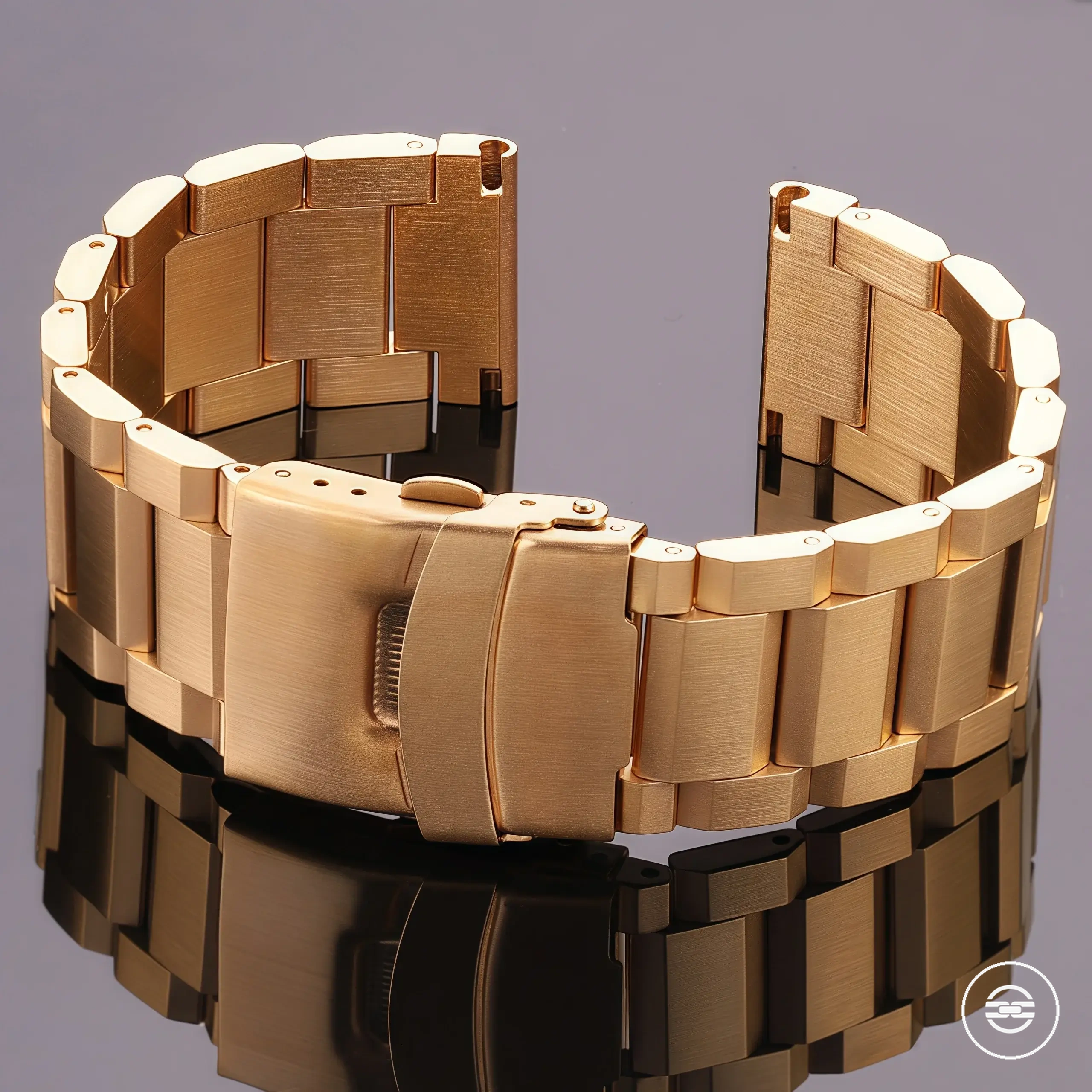
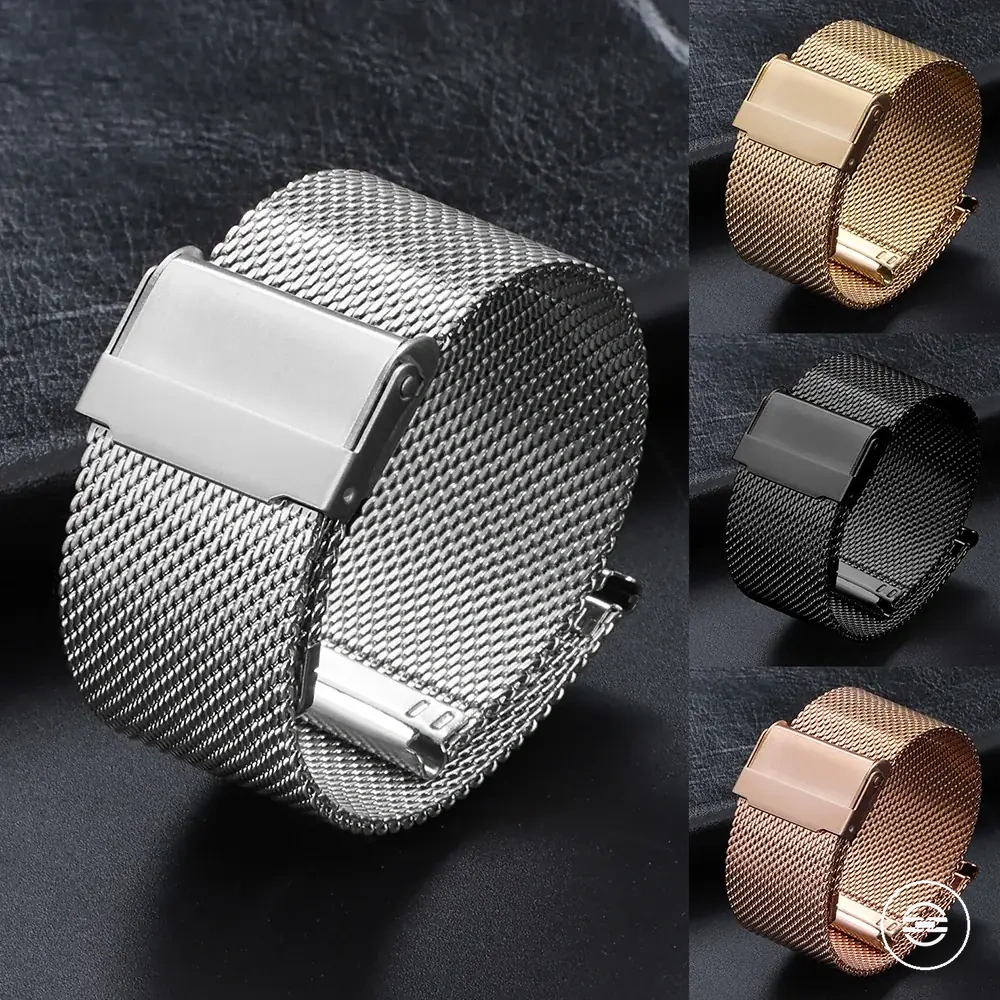
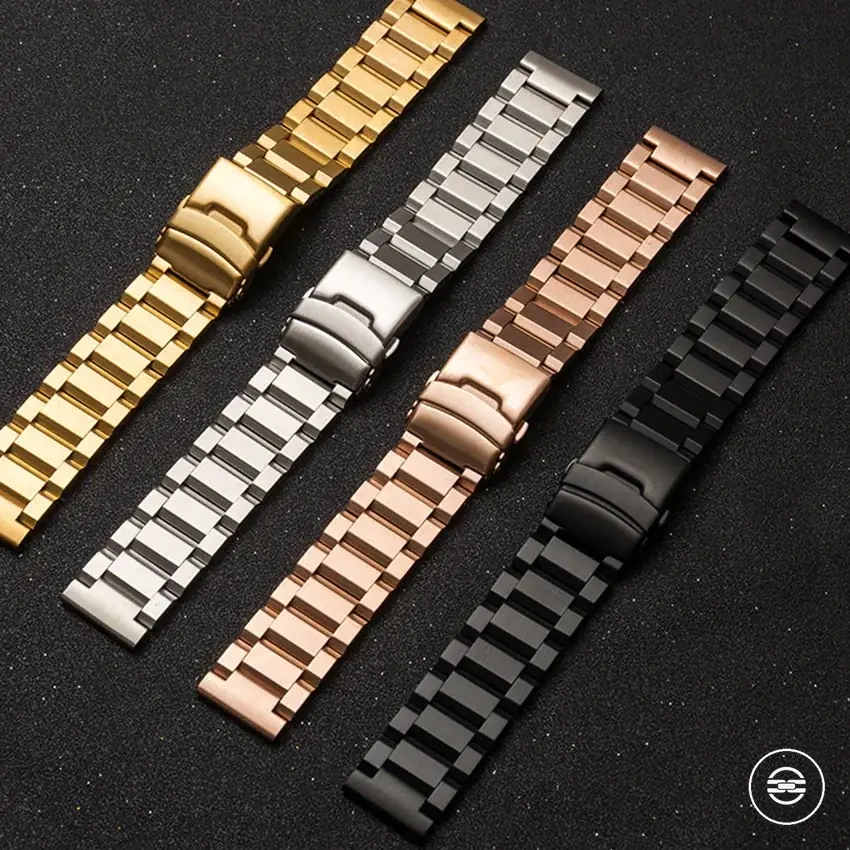
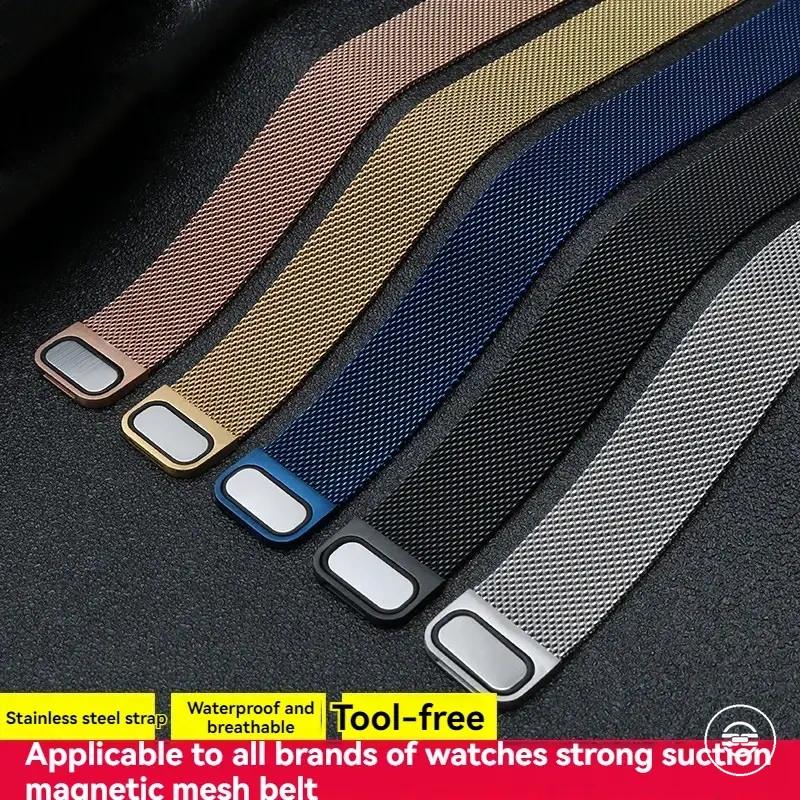
The products below are useful examples for comparing available options. Before buying, check that the compatibility criteria, key features, and product details match your needs.
Care limits for coated, polished, and brushed finishes
Care limits depend on the finish type and its current condition. Cleaning may help preserve a coated finish, polished finish, or brushed finish, but it may not reverse deep scratches, dulling, coating loss, or existing edge wear.
- Use a clean soft cloth for routine finish care.
- Avoid abrasives and heavy pressure because they can increase scratching or contribute to coating exposure.
- Limit prolonged moisture contact and dry the band after cleaning when appropriate.
- Take extra care around clasp edges and link corners where edge wear may appear first.
- If cleaning no longer improves the surface and the issue is deep scratching, damaged plating, or a worn coating, further home cleaning may not help.
A polished finish may show fine surface marks more readily, while a brushed finish can lose its directional texture if rubbed aggressively. A coated finish may also reveal base material when the outer layer is already worn. Deeper scratches, damaged plating, or worn coatings may require professional assessment or replacement rather than home cleaning. For routine maintenance guidance, learn how to clean metal watch bands using finish-appropriate methods.