
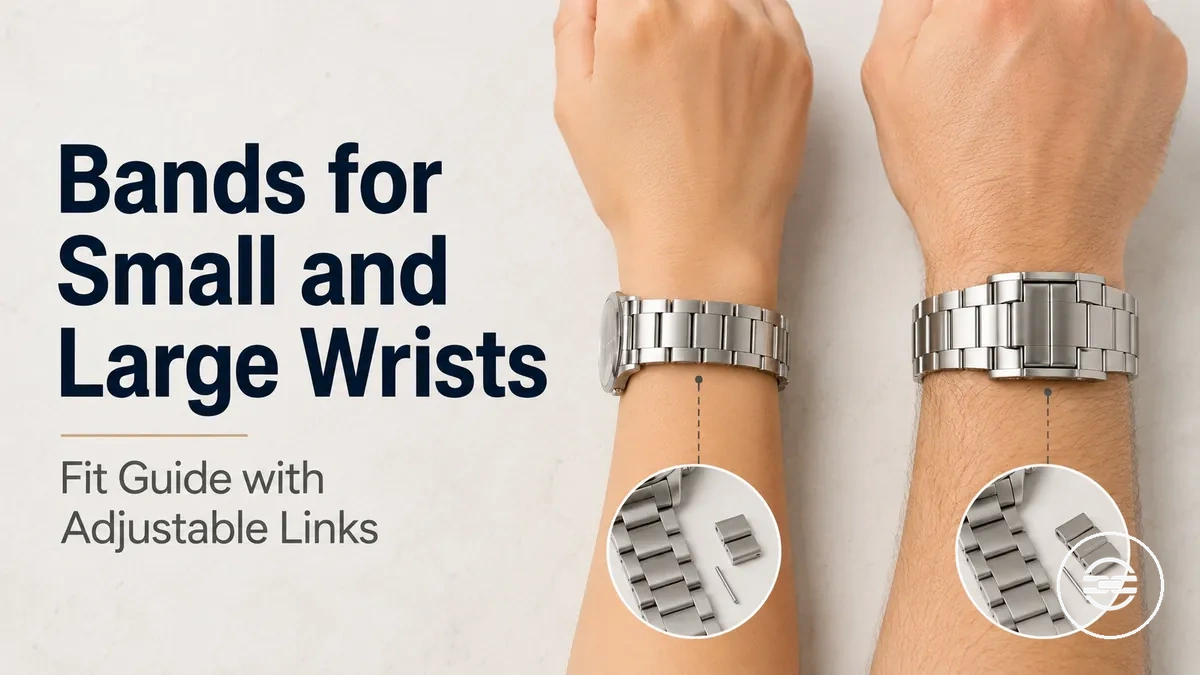
Metal Watch Bands for Wrist Fit
Wrist fit for metal watch bands depends on band length, adjustment range, wrist circumference, clasp position, and band style. Removable links and bracelet construction influence how closely a metal watch band can match different wrist sizes. These factors create the decision framework for evaluating fit on both small wrists and large wrists.
Small wrists may experience excess band length or an off-centre clasp, while large wrists may require additional length or a wider adjustment range to improve comfort. Removable links can help refine bracelet centering, and an expansion band may suit wrist sizes that benefit from greater flexibility. The wider range of metal watch bands provides context for comparing styles, while detailed measuring and link-removal procedures support the decision without replacing this wrist-fit guide. A comfortable and secure fit depends on wrist shape, watch case size, clasp design, and available adjustment points.
Evaluate metal watch bands by comparing band length, adjustment range, removable links, clasp position, and overall bracelet construction. Comfort and security can vary with wrist shape, watch weight, link geometry, and how the clasp sits underneath the wrist. These decision factors provide a practical foundation before comparing wrist size ranges for small wrists and large wrists.
Wrist size ranges for metal watch bands
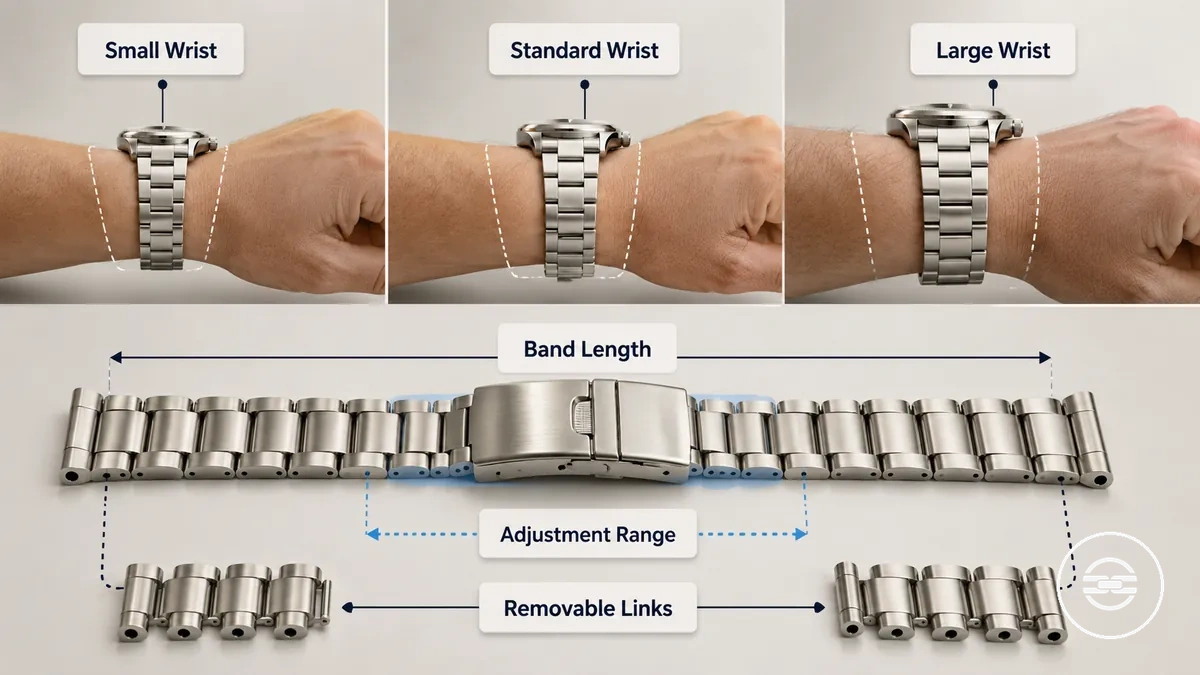
Wrist size ranges guide metal watch band length selection, but they do not guarantee the final fit. Wrist circumference should be evaluated together with band length, case diameter, clasp geometry, and available adjustment allowance. Check the adjustment allowance before deciding whether a bracelet is likely to suit your wrist.
A small wrist may benefit from a short band or additional removable links to reduce excess length, while a standard wrist often suits a standard length with moderate adjustment. A large wrist may require a long band, extra links, or expansion stretch to reduce tightness risk. If a wrist falls near the boundary between standard and long bracelet lengths, adjustment allowance may have a greater influence on the fit outcome than the nominal bracelet length. The following image and table organise wrist size ranges for metal watch bands by band length and adjustment allowance.
These wrist size ranges for metal watch bands illustrate how wrist circumference and band length relate before comparing common fit situations. Use the table as range-based guidance rather than a universal sizing chart, because brand sizing, case diameter, clasp geometry, and link length can change the practical result. For broader selection criteria and supporting measurement guidance, see metal watch band sizing.
| Wrist-size situation | Band-length need | Adjustment factor | Fit risk |
|---|---|---|---|
| Small wrist | Short band or reduced bracelet length | Removable links | Excess length or off-centre clasp |
| Standard wrist | Standard length | Adjustment allowance | Fit varies with clasp position and link length |
| Large wrist | Long band or extra links | Extra links or expansion stretch | Tightness if adjustment is limited |
| Boundary wrist | Compare adjacent sizing ranges | Available adjustment allowance | Comfort may vary with bracelet construction |
Use the size range as the starting point for selection, then confirm final comfort after adjustment rather than relying on the range alone.
Small wrists and short band length
Small wrists often benefit from a short band length that leaves less excess metal after adjustment while providing enough removable links for balanced bracelet positioning. Wrist circumference, clasp size, and link bulk should be evaluated together because each can influence comfort and fit. If removable links or fine adjustment are limited, excess length may remain even after resizing.
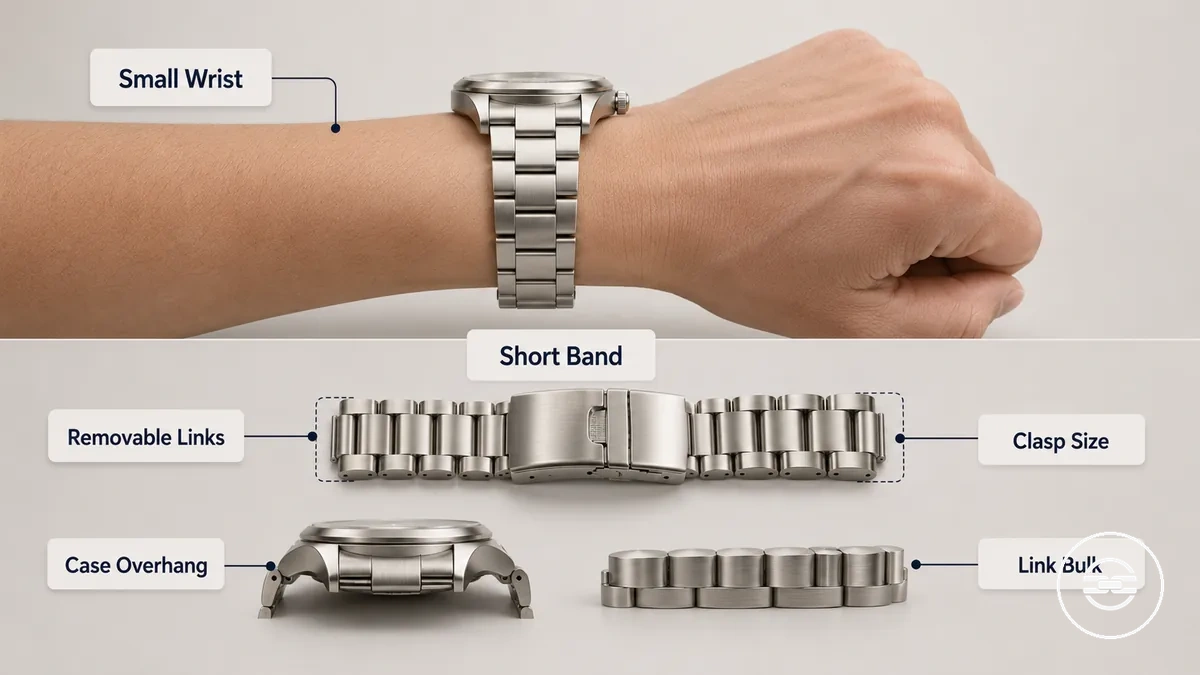
A standard bracelet may still suit small wrists when enough removable links, suitable clasp size, and fine adjustment allow the bracelet to shorten without creating excessive link bulk. Case overhang can also influence how balanced the watch feels on a smaller wrist, even when the bracelet length is reduced. A good fit is indicated when excess length is controlled without concentrating bulk beneath the wrist.
- Excess length can move the clasp away from the centre of the wrist.
- Large clasp size may increase bracelet bulk on small wrists.
- Remaining link bulk can reduce bracelet balance after resizing.
- Case overhang may indicate the watch extends beyond the wrist more than expected.
- Limited fine adjustment can make precise fit changes more difficult.
Large wrists and long band length
Large wrists often require enough full bracelet length before fine adjustment can improve comfort. Long band length, extra links, clasp extension, and wrist circumference should be considered together because fine adjustment cannot compensate for insufficient overall length. When the bracelet provides adequate total length, pressure is less likely to become a comfort concern during wear.
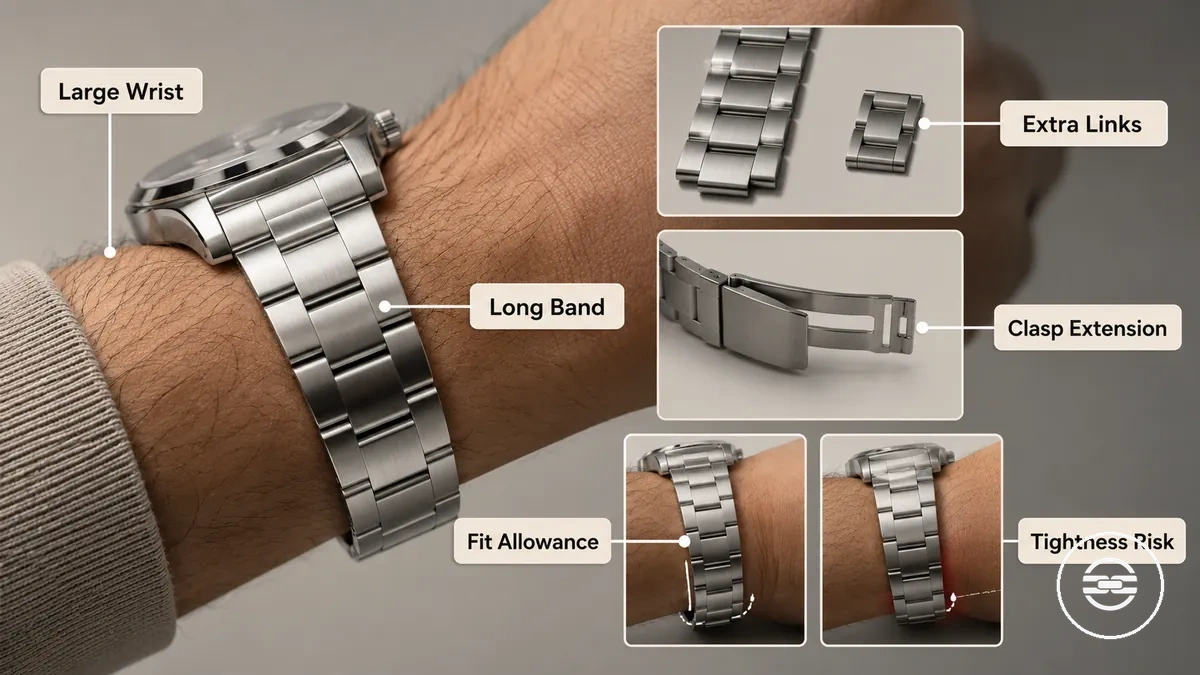
Long bracelets, extra links, and available expansion range each address different fit conditions rather than serving as universal solutions. A standard bracelet may still suit large wrists when full bracelet length, link availability, and clasp extension provide enough allowance, while expansion capacity may help when additional flexibility is preferred. Choose the option that provides sufficient total length before relying on later fine adjustment.
- Standard length: May suit large wrists when clasp extension provides enough fit allowance; limited total length can increase tightness risk.
- Long band length: Increases full bracelet length when additional reach is needed; excess length may still require adjustment.
- Extra links: Extend full bracelet length when compatible with the bracelet; link availability may vary.
- Expansion range: Can improve flexibility during wrist movement; suitability depends on required fit allowance and pressure.
Fit checks for comfort and security
Comfort and security are judged by movement, skin pressure, and watch head stability during normal wear. A fitted metal watch band should feel secure without creating persistent pressure points or unnecessary movement. Use these fit checks to evaluate whether resizing or a different band length may be appropriate.
If the bracelet moves slightly with wrist movement but does not rotate excessively or allow noticeable case sliding, the fit may be suitable for many situations. Pinching, concentrated skin pressure, frequent bracelet rotation, or the watch head shifting across the wrist can indicate that snugness, clasp balance, or bracelet length should be reassessed. Because wrist shape, temperature, activity, and band construction vary, these signals should be interpreted together rather than individually. If multiple signs appear at the same time, resizing may provide a more secure fit.
The checklist below supports a practical comfort and security assessment based on observable fit signals. If the overall pattern suggests poor stability or repeated discomfort, consider resizing or choosing a different band length.
- Snugness: The bracelet stays secure without persistent pressure; ongoing pinching may indicate resizing is needed.
- Skin pressure: Even contact is generally more comfortable than concentrated pressure points; uneven pressure may suggest a fit adjustment.
- Bracelet rotation: Limited rotation is often acceptable; frequent turning around the wrist may indicate excess length.
- Case sliding: Small position changes can occur with wrist movement; repeated sliding may indicate a looser fit than intended.
- Clasp balance: A centred clasp can help support watch head stability; an off-centre clasp may suggest bracelet length should be adjusted.
- Wrist movement: Normal daily movement should not create repeated shifting or discomfort; if it does, reassess band length or resizing.
Snugness, movement, and wrist position
Snugness and movement range are practical fit signals that indicate whether a metal watch band is likely to feel comfortable during daily use. Acceptable movement allows the watch to shift slightly without frequent case rotation or noticeable skin indentation. If these signals remain balanced during normal wear, the fit may be appropriate.
During daily use, observe how the watch sits around the wrist bone as wrist position changes through ordinary movement. A watch that stays generally stable with acceptable movement may indicate a suitable fit, while repeated case rotation, noticeable skin indentation, or shifting away from the wrist bone can suggest that the fit needs further review. Check these local signals alongside the other comfort and security criteria in the parent section.
- Skin indentation: Noticeable or persistent pressure marks may indicate excessive snugness; check whether pressure increases during normal wrist movement.
- Case rotation: Frequent turning around the wrist may indicate too much movement range; check whether the watch remains stable during daily use.
- Wrist position: Repeated shifting away from the wrist bone may indicate reduced stability; check whether the watch position remains consistent through ordinary activity.
Clasp balance and bracelet centering
Clasp balance can affect comfort independently of total band length because clasp position influences how pressure is distributed across the underside of the wrist. Bracelet centering, clasp location, and bracelet symmetry all contribute to wrist feel even when the overall length appears appropriate. Check whether the case remains naturally centred as part of the fit assessment.
If underside pressure is concentrated on one side or the watch case consistently shifts during normal wear, clasp balance may require attention even when the bracelet does not feel too tight or too loose. Link removal side, bracelet symmetry, and clasp design can influence case centering, so the preferred clasp location may vary. Consider whether bracelet centering supports comfortable daily wear before making further fit adjustments.
- Clasp location: A balanced underside position may improve wrist comfort; check whether pressure feels evenly distributed.
- Bracelet symmetry: Uneven link distribution can influence case centering; observe whether the watch remains balanced during daily use.
- Case centering: If the watch consistently shifts to one side, review clasp balance as a separate fit check from total band length.
Metal watch band options for small wrists
Metal watch band options for small wrists should minimise excess length and unnecessary clasp bulk while allowing precise adjustment. Features such as a short bracelet, removable links, fine adjustment holes, and a compact clasp can make it easier to achieve a balanced fit. Use these selection criteria to compare band types rather than assuming one style suits every smaller wrist.
If excess length is a concern, a short bracelet can reduce unused links and support bracelet balance. A mesh style may provide flexible fine adjustment, while a removable-link bracelet can adapt through link removal where the design allows it. Compact clasps may reduce underside bulk, but adjustment range and clasp design vary between bracelets. Compare these metal watch band options for small wrists by balancing adjustment flexibility, clasp size, and excess-length control.
| Option | Small-wrist advantage | Fit risk | Best use case |
|---|---|---|---|
| Short bracelet | Reduces excess length and may improve bracelet balance. | Adjustment range may be limited on some designs. | When a shorter overall bracelet length is preferred. |
| Mesh style | Fine adjustment can support a flexible fit with less unused length. | Clasp size and adjustment design vary between models. | When flexible sizing and wrist comfort are priorities. |
| Removable-link bracelet | Link removal can tailor bracelet length while retaining a traditional bracelet structure. | Fit depends on available link sizes and clasp adjustment. | When adjustable length and bracelet balance are both priorities. |
Choose a short bracelet to limit unused length, a mesh style for flexible adjustment, or a removable-link bracelet when link-based sizing and balance matter more. Compare the remaining bracelet length, adjustment method, and compact clasp before deciding how to choose a metal watch band.
Short bracelets and flexible link styles
Short bracelets and flexible link styles can reduce bulk on small wrists by limiting excess length and helping the bracelet follow the wrist more naturally. Link flexibility, clasp bulk, case fit, and remaining adjustment range all influence the result. Suitability depends on how these attributes work together.
If a bracelet feels balanced but still appears bulky, compare its fixed length with the way its links articulate around the wrist. A short bracelet can reduce unused length, while flexible articulation or removable links may support a closer case fit and preserve adjustment range. Select the construction that controls clasp bulk without limiting necessary adjustment.
- Fixed short length: Reduces excess bracelet length and may limit bulk on small wrists.
- Removable links: Allow length reduction where the remaining adjustment range supports the intended fit.
- Flexible link styles: Greater link flexibility may help the bracelet follow the wrist and support a steadier case fit.
- Clasp bulk: A more compact clasp may reduce underside bulk when its position remains comfortable.
Fine adjustment for avoiding excess length
Fine adjustment helps reduce excess length only after the bracelet's base length is already close to your wrist size. Small adjustment increments can improve comfort and clasp placement without replacing proper sizing. If the bracelet is fundamentally too long, fine adjustment alone cannot compensate for the incorrect base length.
If excess length remains after resizing, fine adjustment can refine the final fit and help maintain bracelet symmetry instead of correcting the overall bracelet length. Before choosing a bracelet, check the available adjustment features so clasp size and fit control match the needs of smaller wrists. Verify these features before making a selection:
- Micro-adjust holes: Help prevent small amounts of excess length by allowing minor clasp adjustments.
- Half links: Reduce large sizing gaps that full links alone may leave.
- Removable links: Help bring the base bracelet length closer before fine adjustment is used.
- Mesh sliders: Provide small adjustment increments on compatible mesh bracelets to improve fit control.
- Clasp size and bracelet symmetry: Help reduce awkward clasp placement after the bracelet has been properly sized.
Metal watch band options for large wrists
Metal watch band options for large wrists should provide enough total length before fine tuning begins. A bracelet that starts too short can create pressure or restrict wrist movement even when minor adjustments are available. Compare total length, extra-link availability, stretch range, and clasp extension when selecting a bracelet.
If a standard bracelet feels tight during wrist flexion, consider whether long bracelets, extra links, or expansion bands better match the required fit allowance. Long bracelets provide additional length from the outset, while added links can extend compatible bracelets without changing their basic construction. Expansion bands can accommodate movement through their stretch range, but comfort still depends on suitable total length and clasp allowance. Avoid any option that creates pressure or restricts normal wrist flexion.
Each option balances length, adjustment, and comfort differently, so metal watch band options for large wrists should be compared by how they provide additional coverage. Choose a long bracelet when more starting length is needed, extra links when a compatible bracelet needs moderate extension, or an expansion band when flexible movement is the main fit requirement.
| Option | Length advantage | Fit limitation | Best use case |
|---|---|---|---|
| Long bracelets | Provide greater total length from the outset. | Adjustment range and clasp extension still depend on the bracelet design. | When a standard bracelet is consistently too short. |
| Extra links | Increase total length on compatible bracelets. | Fit depends on link availability and balanced clasp placement. | When moderate additional length is needed. |
| Expansion bands | Provide stretch range that can accommodate wrist flexion. | Stretch does not replace the need for suitable overall length and pressure control. | When flexible comfort during wrist movement is preferred. |
Long bracelets and extra link availability
Long bracelets and extra link availability matter when the original bracelet length does not provide enough capacity for comfortable resizing. Extra length must be available before removable links or clasp extension can fine-tune the fit. Verify the original bracelet length and supported adjustment options before choosing.
If the bracelet remains too short after using its clasp extension, optional extra links may provide more useful fit allowance than clasp adjustment alone. Added links depend on the bracelet construction and manufacturer configuration, so compatibility should be verified rather than assumed. The final setup should leave enough fit allowance for comfortable wrist movement.
- Original bracelet length: Check that the starting length is close enough to the required wrist coverage before resizing.
- Removable links: Confirm that resizing will preserve enough length for a balanced fit.
- Optional extra links: Verify that added links are supported by the bracelet construction and configuration.
- Clasp extension: Treat it as fine tuning rather than a substitute for insufficient bracelet length.
- Fit allowance: Ensure the final length leaves room for comfortable wrist movement after adjustment.
Expansion bands for larger wrist coverage
Expansion bands provide larger wrist coverage by stretching instead of relying on conventional link removal. Their fit depends on the available stretch range and whether the band remains within its maximum wrist circumference. Pressure distribution should remain comfortable as the band expands.
If wrist size changes during movement or throughout the day, an expansion metal band may provide flexible coverage without fixed-link adjustment. However, limited stretch range, uneven pressure distribution, or hair-pulling risk may reduce daily comfort, and the design may not suit every watch style. Suitability depends on whether the stretch mechanism provides coverage without creating an uncomfortable wrist feel.
| Expansion fit helps when | Expansion fit may not help when |
|---|---|
| The stretch range provides enough larger wrist coverage while remaining within the maximum wrist circumference. | The band must stay near its maximum extension or creates concentrated pressure during wear. |
| Flexible coverage supports wrist movement without conventional link removal. | Hair-pulling risk or the changing wrist feel reduces daily comfort. |
Adjustment range in link and expansion bands
Adjustment range depends on the band mechanism rather than total band length alone. A link band, mesh band, and expansion band can provide different levels of adjustment capacity, fine tuning, and flexible coverage. Compare each mechanism by how it changes fit rather than by bracelet length alone.
If two bands have similar overall length, they may still adjust differently because their link construction, clasp type, or expansion behaviour is different. Removable links and half links change bracelet length in fixed increments, while a micro-adjust clasp or mesh slider can refine the fit without altering the main link count. Expansion stretch adjusts coverage through controlled flexibility rather than fixed-link changes, as shown below.
| Mechanism | Attribute | Value or condition | Fit effect |
|---|---|---|---|
| Removable links | Link adjustment | Adjustment depends on the number, size, and placement of removable links. | Changes overall bracelet length in fixed steps. |
| Half links | Sizing precision | Available only when supported by the link construction. | Can reduce the gap between full-link adjustment positions. |
| Micro-adjust clasp | Fine tuning | Adjustment capacity depends on the clasp design and available positions. | Can refine fit without changing the main link count. |
| Mesh slider | Clasp position | The usable range depends on where the slider locks along the mesh. | Allows flexible positioning within the supported locking area. |
| Expansion stretch | Flexible coverage | The fit limit depends on stretch behaviour, pressure, and band construction. | Can accommodate wrist movement but may change pressure as the band expands. |
The table shows that each mechanism creates a different fit effect and adjustment range, so no single system suits every sizing situation. Lug width is a separate compatibility issue and should not be used to judge the adjustment range of a band mechanism.
Removable links and half-link limits
Removable links determine the broad bracelet size, while half links improve bracelet sizing precision by reducing the gap between full-link adjustments. The available adjustment depends on the link bracelet design, minimum removable length, and remaining clasp position, so removable-link capacity has practical limits.
If the available removable links still cannot make the bracelet small enough, adding or retaining half links may improve the fit, but only when the bracelet supports them. Pin construction or screw construction identifies how the bracelet is assembled rather than how far it can be resized, so the final decision depends on the remaining adjustment options.
- Full links: Full links change bracelet length in larger fixed increments and establish the primary adjustment range.
- Half links: Half links provide finer bracelet sizing precision when full-link changes leave the fit between two sizes.
- Pin or screw construction: Pin construction and screw construction affect link assembly, while removable-link availability determines the practical sizing limit.
- Minimum removable length and clasp position: The smallest achievable fit depends on the minimum removable length and whether the remaining clasp position allows additional fine adjustment.
Micro-adjust clasps and fine tuning
Micro-adjust clasps provide fine tuning after the bracelet is already close to the correct starting length. Depending on the design, they use clasp holes or sliding adjustment to make small fit changes without changing the main bracelet length. Their adjustment range is limited and does not replace correct bracelet sizing.
When seasonal wrist swelling or normal daily wrist changes affect fit, a small clasp adjustment may improve bracelet symmetry and provide pressure relief. The amount of change depends on the available clasp holes or sliding adjustment and the original starting length, so pressure relief is most likely when the bracelet is already sized close to the intended fit.
Stretch fit in expansion metal bands
Stretch fit in expansion metal bands uses elastic expansion to provide flexible sizing without a conventional clasp adjustment process. As the band expands and contracts, it changes both wrist coverage and pressure distribution across a wrist circumference range. This flexibility can improve convenience, although it also involves comfort trade-offs.
When small daily or seasonal wrist size changes occur, stretch fit can adapt without changing the bracelet length. If the expansion mechanism approaches its practical limit, the band may feel tighter because pressure distribution changes as it stretches, so lasting comfort depends on remaining within the intended wrist circumference range.
Helps with:
- Flexible sizing through elastic expansion without requiring clasp adjustment.
- Accommodating small changes in wrist circumference during daily wear.
- Maintaining continuous wrist coverage as the expansion bracelet stretches and contracts.
Limits to check:
- Pressure distribution may change as the band expands.
- Durability expectations depend on the expansion mechanism and regular use.
- Comfort trade-offs vary with the wrist circumference range and the amount of elastic expansion required.
Link removal decisions before resizing
Link removal should be decided from the bracelet’s looseness, clasp centering, removable-link count, and remaining adjustment range. Resizing is appropriate only when these criteria show that clasp adjustment alone is insufficient, so avoid guessing how much to remove.
When the bracelet hangs loosely, compare the current looseness with the link size because removing a full link may create a larger fit correction than needed. If the fit is uncertain, removing fewer links first preserves more adjustment range and reduces the risk of making the bracelet too tight. Use the checklist below to choose the most conservative option.
- If looseness exceeds the available clasp adjustment, consider removing a link.
- If the required change is smaller than the link size, use micro-adjustment instead of removing a full link.
- If half links are available, use them when a full-link change would reduce the fit too much.
- If the clasp position is off-centre, seek adjustment guidance before removing links unevenly.
- If wrist swelling changes the fit during the day, keep the link until the bracelet has been checked across those changes.
- If link removal would disturb watch head balance or approach the removable-link count limit, seek adjustment guidance.
Half links and clasp position can refine fit while helping preserve watch head balance, but the available options depend on the bracelet design. Account for wrist swelling and keep the first removal conservative when the resizing limit or final comfort remains uncertain.
After these criteria are checked, follow the appropriate method to adjust a metal watch band. The method should match the bracelet construction and its remaining adjustment range.
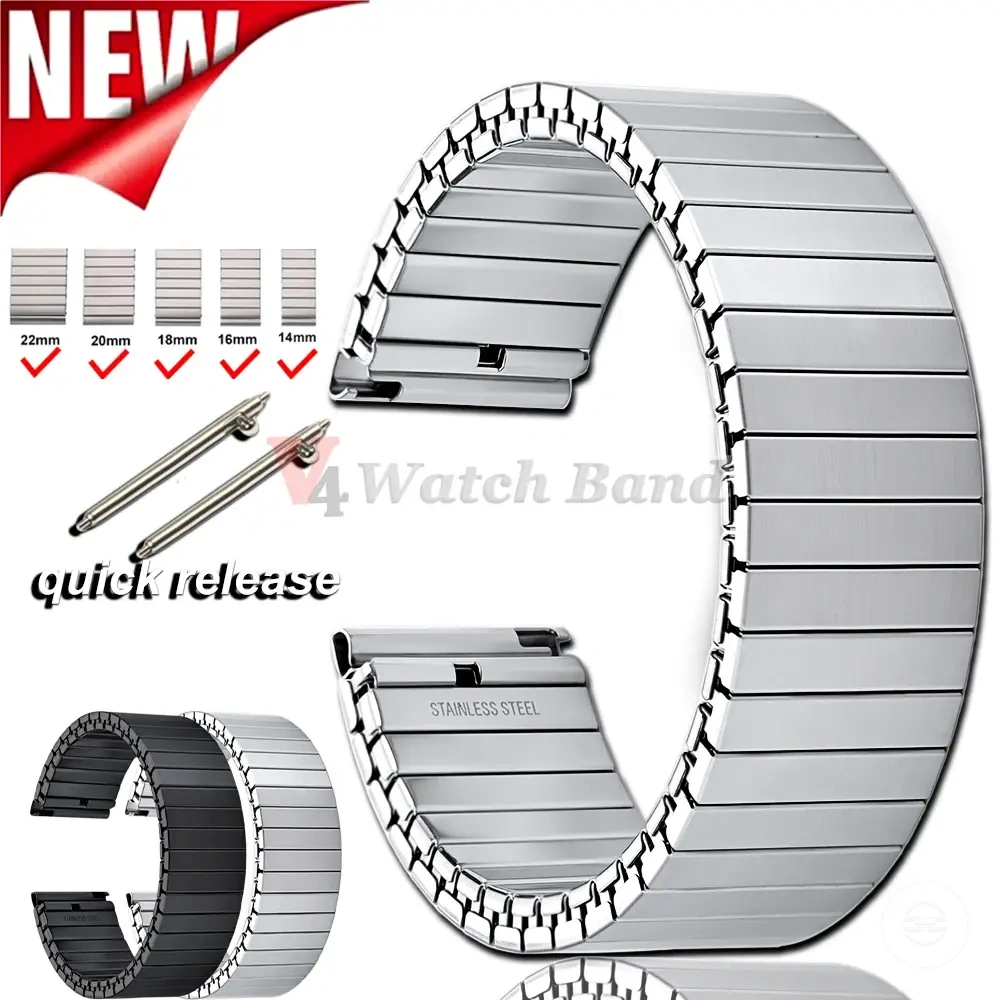
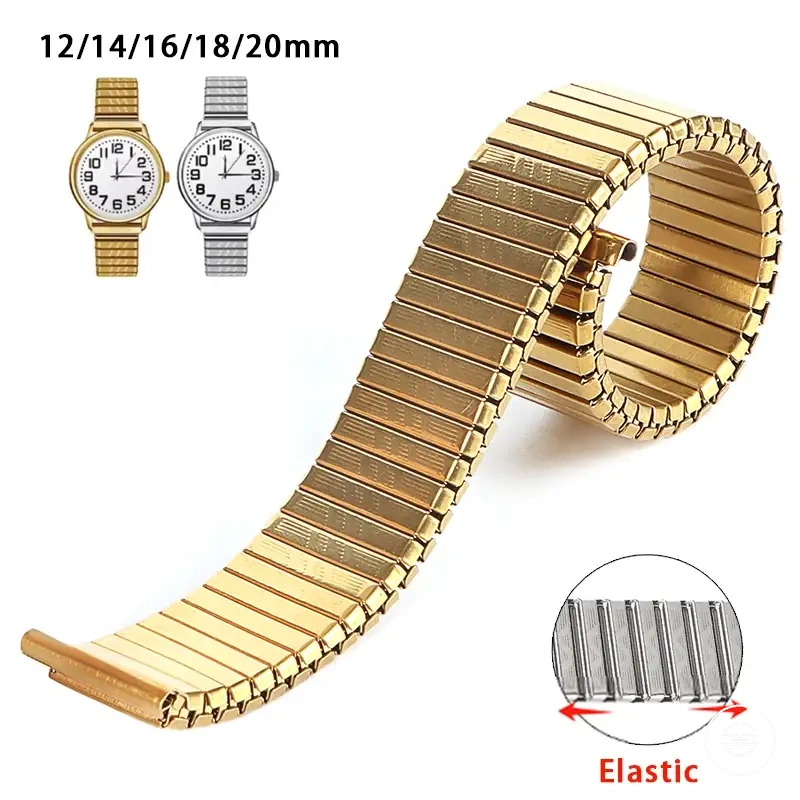
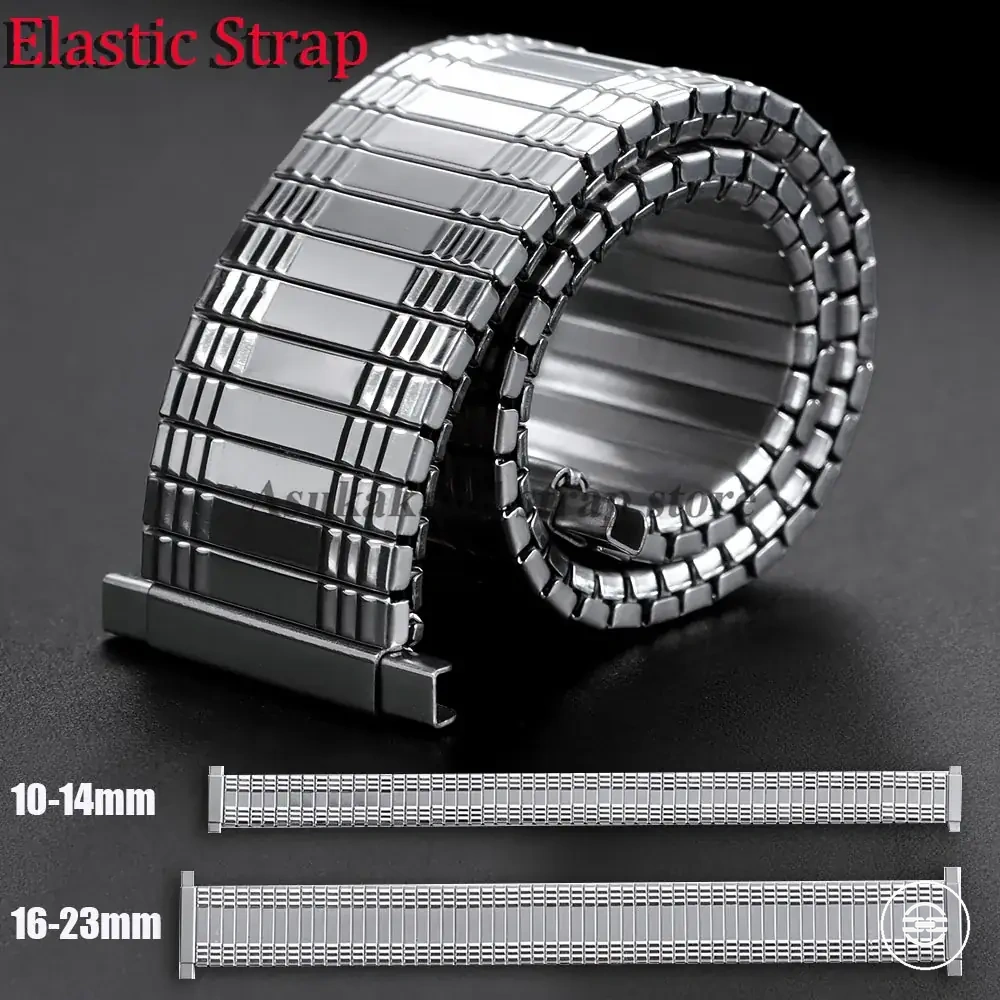
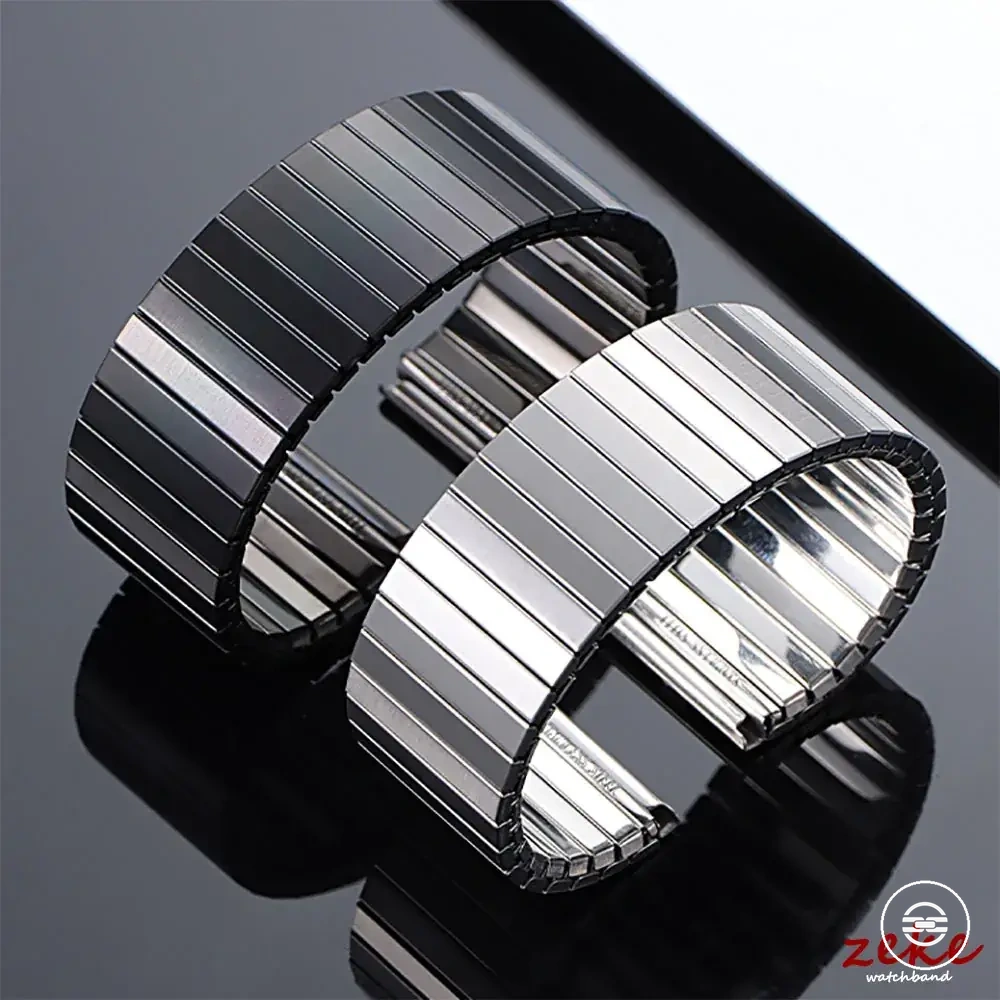
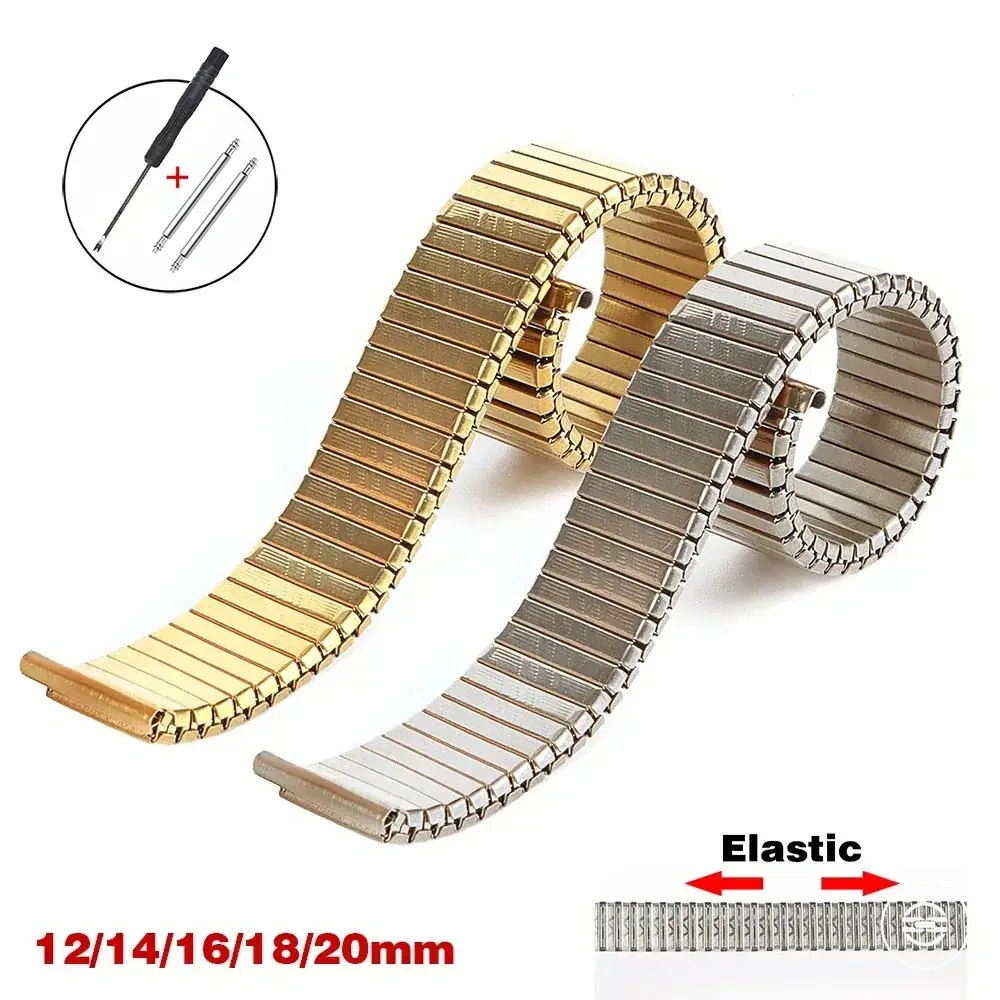
Here are product examples that may make comparison easier. Before buying, always review the compatibility criteria, essential features, and product details.
Estimating how many links to remove
Estimating links depends on the wrist gap, link length, and desired movement rather than a fixed link count. Bracelet construction and wrist shape can change the result, so keep the removal estimate conservative.
When the estimate falls between a full-link change and a smaller correction, removing fewer links first is usually safer. Half-link availability may refine the fit, while clasp micro-adjustment should be checked before deciding whether further removal is needed.
- Wrist gap: A larger gap may indicate that more adjustment is needed, but the link estimate still depends on the overall fit.
- Link length: Longer or shorter links change how much each removal affects the bracelet.
- Desired movement: Allow enough movement for comfort instead of targeting a fixed tightness.
- Half-link availability: A half link may provide a finer correction when a full-link change is too large.
- Clasp micro-adjustment: Check the remaining adjustment range before considering additional link removal.
Keeping the clasp centered after link removal
Balanced link removal helps keep the clasp centered by preserving clasp comfort and bracelet symmetry after resizing. The final clasp position depends on bracelet design, link layout, and the chosen link removal side, so use case centering as a practical fit cue.
When links are removed unevenly, underside pressure and case centering may shift, which can change how the bracelet feels during wear. A balanced bracelet may distribute pressure more evenly, although the result still varies by bracelet design. After link removal, check whether the clasp position feels comfortable and whether bracelet symmetry remains balanced.
When a metal watch band is too loose or too tight
A metal watch band that is too loose or too tight should be evaluated by its movement, pressure, clasp position, and available adjustment range. Loose and tight symptoms can point to different correction paths, while link limits, clasp design, and band style affect the available options.
A band that is too loose may cause sliding or case rotation, while a band that is too tight can create pressure, pinching, or expansion pressure as the wrist changes during wear. If adjustment range remains available, a sizing change may help; when link limits have been reached, a different replacement length or band style may be more suitable. When a metal watch band is too loose or too tight, use the following checklist to connect each symptom with an appropriate decision.
- Symptom: Frequent sliding. Likely fit issue: Too loose. Check: Remaining adjustment range and clasp position. What it means: A fit adjustment may be possible.
- Symptom: Case rotation around the wrist. Likely fit issue: Loose fit. Check: Movement during normal wear and available clasp adjustment. What it means: Less movement may require a smaller setting or shorter effective length.
- Symptom: Constant pressure. Likely fit issue: Too tight. Check: Expansion pressure during normal wear. What it means: More room may be needed if adjustment is available.
- Symptom: Pinching between links. Likely fit issue: Tight fit or restricted bracelet movement. Check: Link limits and overall fit. What it means: A different sizing option or band style may be more suitable.
- Symptom: Clasp sits noticeably off-centre. Likely fit issue: Uneven fit. Check: Clasp position and how the case rests on the wrist. What it means: Review the sizing balance before accepting the fit result.
- Symptom: No further sizing options remain. Likely fit issue: Adjustment limit reached. Check: Link limits and available clasp adjustment. What it means: A different replacement length or band style may be the better decision.
Structural damage such as a broken clasp, damaged pins, or rust falls outside wrist-fit selection. These conditions should be assessed as repair or replacement issues rather than treated as normal sizing problems.